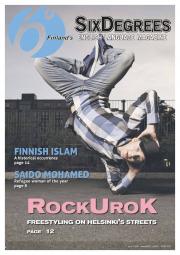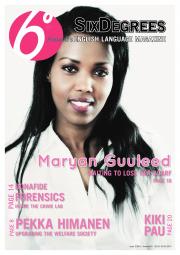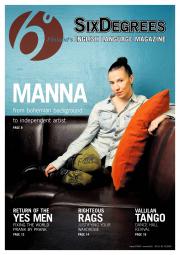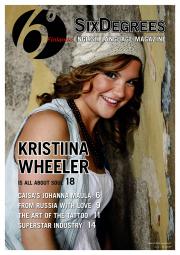


• video gaming A spectator sport Page 10 Rock and revolution Page 16 Ramy Essam Marc Skvorc Accommodating change Page 6 Issue 8/2014 www.6d.fi 25.09.2014 ? 30.10.2014
  • Helsinki A Design Driven City Mikko Saarainen Cities are for citizens, thus design tools help make cities better, more easygoing and functional. Carrying on the legacy of World Design Capital Helsinki 2012, Design Driven City (DDC) promotes the use of design in urban environments and creates ways to incorporate design thinking into the development of public services. DDC offers expert advice to cities on better solutions through design, and helps the design field to address the needs of the public sector through dialogue between various actors involved. Under the banner of ?Talk less, do more? DDC is set to carry out 10-15 designoriented projects  or commissions of various sizes during its two-year span. Focussing on Helsinki, Espoo, Kauniainen and Lahti, each of these projects works on a concept of learning by doing. Tidy Construction Site is one such project in Helsinki. Here the construction service provider of the City of Helsinki, Stara, seeks to enhance the look, feel and tidiness of construction sites around town. Having kicked off in March this year, this urban development project promotes user-friendly design methods in construction sites that consider citizens, workers and the city alike. According to the Tidy Construction Site target, all park and street renovations run by Stara will follow the new construction site guidelines in this project. Tidy construction sites not only make safer environments for workers and citizens, but are also cost-efficient to run if well-designed. The end result is a better urban environment for all of us. www.toimivakaupunki.fi/en www.hel.fi
  • Contents 3 SixDegrees in this issue October 6 Marc Skvorc 4 From the USA to Klaus K and now on to Hotel Kämp, the new general manager of Finland?s most prestigious hotel continues his quest to inspire the local hotel scene. 10 Moniheli Along with Finland?s increasing diversity has come an effort to strengthen the influence immigrants have on the direction of society. 15 Tastebuds We try some international flavours in Tampere and dive into the varieties of tofu on offer at Asian grocery stores. 17 Cultitude Supermassive Festival, Pam Ann ? Plane Filthy, Lenny Kravitz, Le nozze di Figaro, Brit Floyd, R.E.A.D. Also, find out what?s on at the cinema and in the gaming world over the next month. 10 Gaming crowds 12 Post-summer fun 16 Ramy Essam From the privacy of your own home, to the comfort of gaming in front of a huge crowd. An unlikely spectator sport keeps growing in popularity. The SixDegrees Team Editor-in-chief Alexis Kouros Subeditor James O?Sullivan Advertising & Marketing Aiman Kaddoura, Bob Graham, Ethan Shadabi, Kenneth Martin +358 9?689 67 422 Emails in the form: firstname@6d.fi Events for Out & See: james@6d.fi Check out our interview with Ramy Essam on page 16. Image credit: Mohamed Mosaad The sun and light are fading fast, but does this mean that there?s nothing to do outdoors? Surely not! Here?s a pair of options to enjoy. Writers and contributors in this issue Nick Barlow, David Brown, Carina Chela, David J. Cord, Alicia Jensen, Shaden Kamel, Anna-Maija Lappi, Niina Mero, Tania Nathan, James O?Sullivan, Mika Oksanen, Eva Peltonen, Mari Storpellinen, Mimmu Takalo, Kasperi Teittinen, Jutta Vetter, Tomas Whitehouse Starters 24 Out & See Where to go and what to see in Helsinki, Tampere, Turku, Jyväskylä and Oulu. Having stood on the front line of Egypt?s revolution in the midst of the Arab Spring, this student and rock star reflects on his experience. Proofreading James O?Sullivan Layout & Graphic Design Kirby Wilson Print house I-Print Seinäjoki Circulation 50,000 pieces Publisher Dream Catcher Productions www.dreamcatcher.fi 6° DreamCatcher Vilhonvuorenkatu 11B 00500 Helsinki tel. +358 9?689 67 420 info@6d.fi www.6d.fi ISSN 1459-5680 All articles, pictures and graphics are subject to copyright. No reproduction or reprinting is allowed without permission from Dream Catcher Inc.© Dream Catcher Next issue is out on 30 October SixDegrees can also be read at www.lehtiluukku.fi
  • Starters 4 Issue 8 2014 Top 5 things on our mind this month... Contemporary Finnish governments are long-lived Although it may seem that the Finnish Cabinet is shaking at its foundations right now, remember that our recent governments have been relatively durable. For example, none of the four Cabinets we had between 1970 and 1972 (more precisely nos. 52 to 55 in sequence) survived for 500 days. Deer flies greet you in the forest You know what you and Ötzi (remember the Alpine mummy?) have in common, if you go to the forest this time of the year? That you both are pestered by the Lipoptena cervi, or the deer fly (a.k.a. deer ked). You wouldn?t believe how strongly they are built until you try and squash one between your fingers. They can be very annoying but are not considered hazardous to man. Pleasure from dexterity and agility Why is it so nice to be able to wield chopsticks in an oriental food joint over knife and fork? Or being able to stand on one foot while lacing up the other shoe? Is it all about the feeling of power through physical ability? No smoke without smokeless tobacco A former Major League Baseball pitcher Curt Schilling had his salivary glands removed after battling oral cancer. He believes smokeless tobacco, which he used for 30 years, to be the culprit. The locally familiar Swedish varieties do not contain glass or camel excrement, as some urban myths have it, but the salt in them may eat away at your gums ? just think before you pop another bag in. Random ramblings In 1980 the band AC/DC were Back in Black ? but we never realised they had fared so poorly financially during the Bon Scott era. Better Dead than Red ? well, perhaps it is indeed recommendable to wind up a business before the losses become? too much to handle. Nice day for a white wedding ? or how about black pudding with blood relations? Mika Oksanen Serving a purpose New peer support group for eating disorders opens its doors. Text & Photo by Alicia Jensen. F acebook, Instagram, Photoshop: we live in a society obsessed with image. How we look has become a large part of the way we present ourselves socially. Yet an obsession with image doesn?t come without its obstacles, and often impacts our relationship with our bodies. Core to this is our relationship with food ? which has developed in to a ?complicated relationship?. To deal with these issues, support groups in Finland are on offer. Etelänsyli is the southern division of the national umbrella organisation SYLI (syömishäiriöliitto), the eating disorder association of Finland. SYLI began from a combined initiative of both families looking for peer support and professionals with an interest in eating disorders. Now many who use their services have eating disorders themselves. ?It?s about sharing experiences and getting support from shared experiences,? explains Pihla Aaltonen, a volunteer and board member. ?Knowing that others have gone through similar things can be quite comforting.? Currently, Etelänsyli hosts a variety of events: two coffee mornings per week, along with events for families and loved ones with talks on different issues. They also provide email support and are starting ?Friday lunches?, making lunch a social situation to alleviate the anxiety that comes with eating. They maintain an open door policy and are easy to access ? anyone can join; no referral necessary. ?We try and make it positive and informal,? Aaltonen continues. ?If someone?s having a bad day and struggling a wee bit it?s a nice place to come; people understand what you?re going through. A couple of weeks ago they had a lively discussion on how the media affects eating disorder behaviour in young girls in a world where you have to look thin and have all these attributes to you that say nothing about who you are on the inside.? They also aim to educate groups of professionals about what eating disorders are, how to spot them, and how to react to them by holding talks in schools and institutions of higher education ? and recently even a gym. Tangled up in Finnish? James O?Sullivan Word on the S street What is the best gig you?ve been to? Anna I haven?t been to many gigs but I?m going to a gig which I think will be the best, that?s the 1975. They?re coming here to Finland. I really love their music and it?s in a nightclub so there will be many people just dancing around. Julia I?ve been in a gig in Copenhagen, Veronica Maggio. That was very nice. I really like her songs and I like her personality very much. She talked to us and she was very near us. O, you have arrived here in Finland. You?ve also gotten over the shock that summer has already ended, just as it was beginning to cook up nicely. You?ve come to love the quiet, all unnecessary small talk now eradicated from your social portfolio. Heck, you have even swallowed hard to accept the fact that the textbook Finnish you have been studying so hard during your Finnish course actually has little relevance to the spoken parlance on the street. But then something comes along to rattle any newfound confidence with the local lingo. Recent months have seen a flush of sentences on social media and elsewhere online that at first glance look like a mistake. Feast your eyes on sentences such as this one: Kokko! Kokoo kokoon koko kokko!?? Koko kokkoko??? Koko kokko! ? Ok, kokoon kokoon koko kokon! Yep, I?m afraid it actually means something! In fact, the entertaining blog Depressing Finland is full of such tongue twisters. Here?s how they translate this conversation between two people: English support Currently Aaltonen is also planning an English support group, which will be held on 8 October at their office. ?Peer support and easy access mental health support in English doesn?t exist,? she says. Someone seeking support for the first time would go either to their local health centre or student health services and get access to a professional. Yet some people might want something more informal. In addition, seeing a professional may take a while. The first event is a pilot to see if there is demand. When Aaltonen moved to Scotland to study some years ago, she had an eating disorder. ?Because I was in a foreign country, I didn?t really know how to access services. I had times when I was really struggling,? Aaltonen says. Eating disorders often start during a time of great change and uncertainty, and given the challenge of moving to a new country, Aaltonen believes that there may be demand from people here in a similar situation as she once was. ?It?s about sharing experiences and getting support from shared experiences,? explains Pihla Aaltonen. 8 October, 17:00-19:00 Tallberginkatu 1, Cable Factory B-Stairway, 4th floor. Email Pihla Aaltonen at: pihlaaaltonen@yahoo.com For more information: http://etelansyli.fi ?Kokko (a surname)! Build the whole bonfire up!?? The whole bonfire??? The whole bonfire!?? Alright, I?ll build up the whole bonfire!? The head scratching doesn?t end there, mind you, with the likes of this also on offer, courtesy of FinnInExile from the same blog: Keksijä Keksi keksi keksin. Keksittyään keksin keksijä Keksi keksi keksin keksityksi Huh?? Have no fear (if possible), here comes their explanation: ?Inventor Cookie invented a cookie. Once the inventor Cookie had invented a cookie he invented that a cookie was invented.? Ah, good to know it makes about as much sense in English, then. And so, just in case you think you may have gotten the hang of it, along comes a doozy along the lines of: Hilja sanoi Hiljalle hiljaa niin hiljaa ettei Hilja itsekkään kuullut kun Hilja sanoi Hiljalle hiljaa... Goddit? Nope? Maybe? Kinda?? Well, here goes the blog?s explanation: ?Hilja said ?be quiet? to (another) Hilja so silently that Hilja didn?t hear herself as she told Hilja to be quiet???? But, at the end of the day there is no reason to fret. Just as we don?t communicate in vast chunks of text pinched from Dr. Seuss (at least, the majority of us don?t, anyway!), there are few occasions in life here in Finland where such sentences will come in handy. Now, if only the same thing could be said about the partitiivi case! Finnish After Dark Learning the Finnish they don?t teach in school Finnish: Heikko happi A BL E AVAIL ATED W O N TR IL L U S AS AN ERBACK ! tores PAP jor books a /fad rom m .6d.fi Buy f line: www n o or Wolf I?ve been wanting to go to a Metallica concert for the longest time. Now that I?m 38 I finally made this wish come true: I went to see Metallica in Basel, Switzerland. They played Ride the Lightning and when they played it, a thunderstorm rolled over the stadium, it was pretty cool. It was raining but nobody left before the concert ended. English Equivalent: Weak oxygen (literal), to be under the weather, to be the worse for wear Lauri My favourite was Biffy Clyro. I just like the band a lot, and it was in a small club, the Circus. ? ? ? Moi, Janne! Lähetkö pelaan sulkkista kohta? Siis ei pysty! Vähä heikko happi. Meni aika myöhään eilen. No, seuraavan kerran sitte! Moro! Compiled by Alicia Jensen. ? ? ? Hi Janne! Fancy a game a badminton? No way? I?m feeling a bit the worse for wear. It was kinda late last night. Ok, next time then. See ya! While being a bit under the weather could mean anything from a touch of flu to a severe hangover, its occurrence on a Sunday (or worse - Monday) morning is more likely to be interpreted as the latter not the former. We recommend that you insist it is just a mild dose of flu, although if your boss did see you throwing up outside Circus at 4 am, that might not work terribly well. David Brown and Mimmu Takalo
  • SixDegrees Starters 5 SixDegrees Housing a problem Students continue to struggle with housing costs. But will this change anytime soon? Tell me about your city... ? Tbilisi Marc Ryckaert James O?Sullivan Y OUR years as a student undoubtedly represent some of the best moments of your life. Fresh out of home, away from the grasp of your parents, you are now free to do whatever you desire. Gone is the nagging, the hassling and the moral compass, and in their place is the time and space to rack up a bunch of knowledge related to life?s lessons. For the overwhelming majority, this means living on the bare minimum, heating up one-minute noodles and spending everything else on beer and entertainment. Unsurprisingly, students continue to struggle with the cost of housing while studying. A closer look reveals just how much, however. Helsinki Times recently published an article that outlined that the housing supplement for students disbursed by the Social Insurance Institution of Finland (Kela) is not nearly enough to cover students? housing costs ? especially in the Capital Region. As a result, nearly two-thirds of students are forced to fend for themselves and search for a flat from the pricey private rental market. Simply put: they barely have the funds to support this, if at all. Although the rents of studios have increased by an average of 23 per cent this decade, the amount of the housing supplement has remained virtually unchanged during this time. Currently students are entitled to up to 201 euros per month. Although the general housing allowance is set to increase at the turn of the year, the housing supplement for students is in a state of deep freeze (how appropriate, given the climate), and will once again remain unchanged. Several managing directors of student housing foundations have expressed their concerns about the situation, hoping to push the supplement up to somewhere in the vicinity of 300 euros. Regina Ollila, a benefits manager at Kela, is similarly in favour of increasing the housing supplement for students. ?High housing costs force many to work and may prolong study times,? she is quoted as saying in the article. Kela believes that a single housing allowance intended for all citizens represents the best solution to this problem and has informed ministries of such. Nonetheless, the issue of student housing is one that always comes up this time of year for similar reasons each time. Thus, it remains to be seen if domiciles will become any more affordable in future. HOW WELL DO YOU KNOW HOTELS IN FINNISH? 1. Service 2. Bathtub 3. Reservation 4. Tourist 5. Breakfast 6. Guest 7. Conference 8. Holiday 9. Buffet 10. Suite 11 11. Room Georgia?s historical old buildings and churches are a feature of the city. Shaden Kamel I sat down with Mariam Tokmazishvili to learn about her city, Tbilisi, the capital of Georgia. Tokmazishvili is a 24-year-old a master?s degree student at the University of Helsinki, studying intercultural encounters. There are approximately 4.5 million inhabitants in Georgia and about 1.5 million in the city of Tbilisi. Georgia?s historical old buildings and churches distinguish it from other mainstream world capitals. Georgian people and their hospitality is a salient marker of the country. The tradition and culture of wine tasting is also a prevalent Georgian feature, especially for those who are partial to a glass of plonk. The country has a huge selection of grapes and offers a big selection of wine that includes modern standard wine as well as more traditional varieties, such as Khvanchkara one of Georgia?s trademark wines. More interestingly, very rare grapes grow in Georgia; hence Georgia is home to rare wines that cannot be found in other countries. The region of Kakheti is a common touristic attraction, only one hour and 45 minutes from Tbilisi by car. This region profits from wine making: it is entirely for planting and taking care of grapes. Additionally, it is a historical area hence it attracts tourists who are interested in wine and/or historical excursions. The city?s architecture is mixed, containing both old fashioned traditional Soviet Union buildings and more modern designed buildings. Shardeni Street, for example, looks like a typical European city street with both sides of the street full of plush shopping centres, restaurants, clubs, hotels and pubs. Furthermore, typical tourist accommodations are located nearby Shareni Street, as it is well equipped with services and facilities and is near to the city centre. Soloaki is Tbilisi?s old town. Its unique architecture and traditional way of living attracts one?s attention. The way houses are built so close to each other reflects the nature of the neighbourhood?s inhabitants. ?It is not just a random person living next to you; people there perceive each member of the neighbourhood almost as a family member,? Tokmazishvili says. They share their major life events together, as well as their food. Marshutka, a yellow coloured mini bus, is the typical means of transportation by local Georgians. Tokmazishvili describes Tbilisi as a yellow city when viewed from above due to their prevalence on the streets of the city. It is not easy for tourists to take such means of transportation. However, taxis are available at very cheap rates ranging from 2-3 euros to the city centre and 4-5 euros to the suburbs. Generally, the main reason people revisit Georgia is because of its varied and delicious traditional cuisine that is especially interesting for meat lovers. A common traditional dish is khinkali, dumpling filled with uncooked meat. Tokomazishvili explains that when cooked the juices of the meat are trapped inside the dumpling. She elaborates that one has to eat Khinkali in a particular way, and ?suck the juice in the dumpling while taking the first bite then continue eating it?. ?Food prices are really cheap, but that does not mean that the quality is low. In fact, the quality of food is really high: vegetables and fruits have very low chemical levels because they are produced domestically,? Tokmazishvili clarifies. Furthermore, Georgia produces its very own dairy products and cheese, such as sulguni, which is definitely worth a try, she adds. During June, July and August the city is full of tourists. ?10 years ago, I never heard a word in English or any other language. Now you could hear people speaking in different languages and detect that they are tourists, which is dramatic change for the good? she adds proudly. Test your knowledge of Finnish vocabulary by using the local equivalent. Read our interview with Hotel Kämp?s general manager Marc Skvorc on page 6. Puzzle by Eva Peltonen. Solutions on page 18. Contact james@6d.fi if you want to share the inside word on your town.
  • 6 We Met Issue 8 2014 pitching kämp
  • We Met 7 SixDegrees Marc Skvorc has worked in hotels everywhere from Hawaii to Washington, DC. After revolutionising Klaus K he is now running Finland?s most famous hotel, Kämp. Text David J. Cord, image Tomas Whitehouse A MERICAN Marc Skvorc has seen much of the world. He has lived and worked everywhere from Saudi Arabia to New York, from London to Florida. But it was in a hotel school in Strasbourg, France where he met his Finnish wife-to-be Mia. After working in hotels across America they moved to Finland. Here Marc transformed the Klaus K hotel, turning it into the country?s first design hotel. But his road didn?t stop there and now he is leading Kämp, the most prestigious hotel in Finland. You seem to have a very geographically diverse background. Yes, my father was in the military for most of my childhood, so we lived wherever he was stationed. I was born in Germany, but we left soon after my birth. We lived in lots of places, like Ethiopia and South Korea. In my teens we were in Monterey, California, and I still consider that as a type of hometown area for me. My father left the military and moved to Saudi Arabia, but I stayed in California to go to boarding school. In a way it was like a preparatory school for my post-student life: I cooked a lot, went out to eat a lot, learned how to do my own laundry and things like that. When I finished high school I went to a small, private business school in downtown L.A, studying to be a public accountant. But that wasn?t working out, so after about six months I visited my parents in Saudi Arabia. There I realised I didn?t quite know what I wanted to do yet. For a while I worked for an Irish company there in Saudi Arabia doing some basic data entry. In Saudi Arabia all the expatriates had their own compounds. These areas might be for particular companies or nationalities, like the British compound or the American compound, and I got invited to get-togethers at these places after work. Once I was invited to a party by this American who spoke eight or nine languages and who was a spokesperson for the Saudi military. Here I was, at 18 years old, sitting next to this balding, dignified, elderly German gentleman. The host came to me and said, ?I?d like to introduce you to your neighbour. This is the president of Chase Bank.? I was exposed to some really interesting people. So did meeting all these new people help you decide what to do with your life? No, not directly. I still didn?t know what to do. I ended up leaving Saudi Arabia to visit my brother in Alaska, and after that I went back to California. I worked there for a while, saved some money and decided to go travel and try to figure out what to do. I started with an aunt in Berlin and later went to Munich to visit a cousin. That was great. I drove his Porsche ? the first time I ever drove a Porsche ? and visited Oktoberfest. Suddenly I received a letter from a girl I had met in Saudi Arabia who lived in London. I visited her in London and found a job baking bread in this little deli. The environment was exactly like a sitcom with all these diverse, wacky characters. I was this longhaired 18 or 19-year-old American kid. There was a Nigerian and a Jamaican. Mustafa was Moroccan who made the sandwiches and charmed all the little old ladies who came in. The store manager was very British. He spoke in this Cockney British accent which was so strong that he was impossible to understand. It was so much fun and we were all so happy. Eventually I left London and later returned to California. Mom and Dad sat me down to have a serious conversation. ?What are you going to do?? they asked. ?We?ll support you, but we need to figure this out.? I remembered a friend in London who was going to hotel school and got out the brochure he had given me. I thought the school was located where I was born in Heidelberg, Germany and applied with this eloquent letter about returning to my roots. They accepted me but told me that the campus for the hotel school was actually in Strasbourg, France. So you got into the hospitality industry in a very roundabout way. It was actually very natural. Remember, we moved around so much that I felt comfortable in hotels. I have very strong memories of being in various hotels in various countries all over the world. I would run off to play and my parents would realise they had lost me. They would usually find me talking to the hotel staff or getting fed by the cooks in the kitchen. I was at home in hotels. Also, the parents of a good friend of mine owned a hotel in Los Angeles. They told me that whatever happens in the economy or politics, someone will always need a hotel room. Of course, what kind of hotel room they need and how often they travel will depend upon a lot of things, but the core idea is that people will always need hotel rooms. I?m not risk averse ? far from it ? but I thought that this was a really solid industry. This was a defendable business, and something I was very comfortable with. What was the hotel school in Strasbourg like? It was in a beautiful chateau. The school had about 90 students, four of which were Americans and ten of which were Finns. I was surprised that there were so many Finns there. I rented a house outside of the school with a couple of friends. One day I was sitting out in the front lawn and saw a car go by. The driver was a girl with blond hair. This was Mia. I eventually met her and something clicked right away. We both liked to go out to eat and so we made up all these excuses to go out to restaurants. All of our friends were saying, ?Enough with the excuses already! We know why you are together all the time.? We fell in love and had a dream that someday we would run a hotel together. After the school in Strasbourg we continued our education in Rhode Island. We got really good jobs working in Pebble Beach for a while, but then I got a job in Maui, Hawaii. Mia went to Pepperdine, California to get her MBA. Later we ended up going to New York City, to Palm Beach in Florida, to Washington, DC. I went back to New York City to work with the W Hotels. It was in January 2004 that we moved here and started our own hotel company. ?I have a lot of work to do here in Kämp.? So you moved to Finland in the winter? What were your first thoughts of Finland? Well, we had visited here a few times previously, but we didn?t come very often during the winter. Family in Finland liked to come and visit us for Christmas holidays, which makes sense when you realise the places we were living! I love Finland. This is home. It was seven years ago when I broke the record for the longest time living in one place, and I?m still here. There are so many good things about living in Finland, like the quality of life, the amount of holidays and the environment for our children ? the grade school is only a 150-metre walk from our house. And Finland is in a great position geographically. I think I put 25 new stamps in my passport my first year here because it is so easy to travel around Europe from here. In America you can?t do a spur-of-the-moment trip to Italy, but you can do that here. But the main reason you and Mia came to Finland was to develop the Klaus K hotel. What relationship did Mia have with the hotel? Mia?s family owns a company that owns the real estate where Klaus K is located. The company was established in 1867, so it was in operation long before that building was even there. My mother-inlaw ran it when it was called the Klaus Kurki for about a year back in the late 1970s. But besides that none of our family members were involved in the hotel business. We started the company, got some partners, and set about turning the Klaus K into a design hotel. This was a brainchild of myself and a former partner. It was one of the best decisions we made to team up with local people who had experience with hotels. This was the biggest thing I?ve ever done. What is a design hotel? The hotel had been a very good, basic hotel for business travellers, but I saw a lack in the market. We have the traditional luxury hotel Kämp and we have good quality mainstream hotels, but there was nothing in between. On one side we had Kämp, which is something special. It is more than just a hotel. On the other side we had these hotels which were good but not memorable. My experience was that there is an opportunity, a niche in the market. We came up with an idea for a new brand in a new category, something which would blend the other styles. We didn?t want a cookie-cutter hotel the same as everything else, but instead something with contemporary luxury. We took inspiration from the Kalevala. It is not a theme: you won?t walk into the hotel and see a label saying it is a Kalevala hotel. It isn?t a museum, either. The Ateneum does a much better job presenting that. Instead, we took inspiration from something very Finnish and which meant a great deal to Finnish arts and society. Nobody had really done it in our business. We saw an opportunity to celebrate something so meaningful to Finnish culture. We are very happy with the results. I am so proud of what we have accomplished. We have developed so much loyalty with guests who keep coming back. We get more and more positive comments. The team is very loyal, too. They have a young spirit and are still building up the hotel. When I moved to Kämp late in May Mia stayed at Klaus K. She is still running it. Tell us about joining Klaus K with the Kämp Group. It was very gratifying to sell a brand which someone else thought was valuable. We sold the business and then invested in the new owner, the Kämp Group. We did the press release one day at noon and later that afternoon I came to Kämp with the CEO to be introduced to the staff. The next morning I came to Kämp to work. Joining Klaus K with the Kämp Group means that we can do what we did with Klaus K on a bigger scale. We can bring together these different brands ? Klaus K, Kämp and GLO hotels ? and be the leader in the market when it comes to the luxury hotel business. We are in a unique position. It feels great. It feels better than I could ever have expected. I am super proud of the idea I am general manager of Finland?s most famous hotel. I feel very privileged and I take it very seriously. It means a lot to me. It is hard to find the best thing about my job. If I keep it selfish it is that I have this privilege to run this hotel. I have an opportunity to do what I think I do so very well ? I?m not perfect by any means, but this is what I live and breathe for. I understand luxury. I understand traditional luxury, as well as modern and contemporary luxury. This is a dream fit. What is the worst thing about your job? Worst thing? I don?t look at things like that. There are opportunities everywhere. How?s the business environment? Particularly, how is the Russian tourist market? The Swedes, English and Americans don?t necessarily come here for luxury. The Russians, however, are coming here for the luxury. We are still getting Russian tourists, but it is less than before. Something severe can happen any day which could change everything. The situation with Ukraine has affected travel here, but so far people are still coming. To tell you the truth I am more bullish about this. This is not the end of the world. How do Finns perform in a business where service is so important? In the hotel business there is a need for people to be multitalented. They need to be able to handle multiple things at the same time and have multiple skills. Given the education level in Finland, I find that in general people can do that. If they have the enthusiasm and right attitude it goes the right way. I don?t like to generalise, but Finns are typically seen as not forthcoming or outspoken. In hospitality, one needs to be more forthcoming so your guests know what you are thinking. Finns need to acknowledge this and act upon it. We need to manage it. What?s next for you? That is so funny. I spent two years developing the Klaus K hotel. That day I got it open the very first question I got was, ?Well, now what are you going to do?? I have a lot of work to do here in Kämp. I want to grow this business to what it can become. In Kämp Group our intention is to expand. We will develop and/or purchase other hotels in the very near future. We just renovated the sixth and seventh floors of Klaus K. They used to be offices, but we turned them into hotel rooms. Completing these new Sky Loft rooms in Klaus K was like, in a way, having another child. I?ve been working on that for two years and they are open now. They are simply beautiful. I love the feeling of that first second when I take someone in to see the Sky Loft rooms. They stand there a second and the first thing out of them is usually a sigh or gasp. 90 per cent of the time, the first thing they say is ?Wow!? When I hear that I feel so good. Building Klaus K and then coming to Kämp, well, this is a dream come true. Name: Marc Skvorc Date and place of birth: 30 November 1967, Germany Education: BS, Johnson & Wales University; Executive MBA, Helsinki School of Economics Family: Wife Mia, daughter Celine (13) and son Remi (11) When I was a child I wanted to be? a doctor. In the future I hope? there won?t be any war. The one thing that would improve the world would be? a better use of water. I admire? honesty and integrity.
  • SixSociety Degrees 8 Issue 8 2014 Column Lest we forget A lot happened in Estonia during the summer of ?88. It began following the banning of a rock concert in Tallinn?s inner city by the ruling Communist Party, when a few thousand ordinary people walked down the road to a large outdoor arena, and started to sing. Moniheli: A network of multi-cultural associations The next day, there were 10,000 people at the arena. By the sixth night there were 200,000 people, holding hands and singing traditional songs unheard in the country for 50 years. Bafrin Eskandari This story, in some form or another, was played out in more than a dozen East European countries during ?88 and ?89. In Romania the Ceausescus were shot after a kangaroo court hearing, in Czechoslovakia the Velvet Revolution seized power through sheer force of numbers, and in Berlin the sound of hammers smashing a diminutive concrete wall marked the end of European communism forever. What these stories have in common is heroism. In Prague, Marta Kubi?ová emerged from 18 years of enforced silence to sing her banned anthem Prayer for Martha for a crowd of 100,000 people, knowing full well that in doing so she was challenging the regime to silence her. In Bucharest, miners trucked in from the countryside to cheer Ceausescu took to jeering him instead, despite lines of heavily armed stooges glaring from the balconies. ?F rom Sofia to Gdansk, from Riga to Tbilisi, ordinary people stood up for what they believed in, and won their countries back.? From Sofia to Gdansk, from Riga to Tbilisi, ordinary people stood up for what they believed in, and won their countries back. The sadness is that these stories are being forgotten. While references to Hitler and Stalin still abound in our media, few young people are familiar with Honecker, Zhivkov or Kádár, despots who oversaw the enslavement and oppression of millions of their own people. These people need to be remembered, and not only in the countries they ruled. Every weekend thousands of tourists infest Tallinn, and yet the city?s extraordinary Museum of the Occupation sits deserted. Budapest?s Terror House does better trade, but still nothing like the numbers one might expect. Other European capital cities seem to have chosen to forget the events ever happened ? there are no museums; not even statues of those who gave their lives. The 25th anniversary of the fall of communism will likely be marked in each of the dozen countries liberated, but without a glittering array of foreign dignitaries. For whatever reason, Central and Eastern Europe?s journey from dictatorship to democracy is no longer particularly sexy. Shouldn?t every European school child be as familiar with the events leading up to the fall of the Berlin Wall as they are with the rise and fall of Hitler? Is the tyranny of the Warsaw Pact really that much lesser than the tyranny of fascism? George Santayana told us that he who forgets history is doomed to repeat it. If he is right, the future of Central and Eastern Europe might not be as hopeful as it should be. David Brown is a language consultant and journalist, regularly covering stories in Africa, Asia & the Middle East. He has lived in Finland for over 10 years. (left-to-right) Luz Peltoniemi, Simeon Walls, Li Chen and Melis Ar?-Gürhanl? attend a meeting for the iCount project at Moniheli?s head office in Helsinki?s Sörnäinen. Along with Finland?s increasing diversity has come an effort to strengthen the influence immigrants have on the direction of society. Andy Kruse J ust some 30 years ago, seeing a person of foreign ethnic background in Finland was a rare thing. Since then, an influx of immigrants has made the landscape much more colourful. The rainbow extends from the Russians and Estonians who make up most incomers, to Somalians and Chinese, Thais and Turks, and also Latin Americans, just to name a few. But within these growing numbers, the societal influence remains limited. Thus, organisational efforts are arising to give these groups a stronger voice in a still very Finn-dominated society. Moniheli, an organisation started in 2010, provides a network for over 60 multicultural associations representing various ethnic groups or themes in Finland. It joins them in membership and provides services such as advice and training in project management and financing, information flow through newsletters and updates of current changes in societal systems and laws, and even use of its facilities. ?The main idea behind what we do is to help make Finnish society a good place for anyone to live and work,? states Riitta Salin, executive director of Moniheli. ?And this is not just through promotion of the immigrants? ways of doing things, but to develop a well-rounded environment along with the ways also desired by Finns.? Impacting the direction of society A current ongoing Moniheli project, iCount strives for the goal of ?active citizenship?. Funded by the EU Integration Fund, the central idea is to empower new and aspiring citizens to impact the direction of society, beyond simply the power of the vote. ?Immigrants can feel like outsiders even if they have a career, a family, and love being here,? observes Li Chen, an iCount member and immigrant from China. ?This is a project to motivate these people to get involved in societal life and impact the future lives of their children.? Moniheli is currently training three iCount members to become versed in potential avenues for minorities to influence society?s decision-making processes, who will then return to their respected cities and spread these ideas within immigrant groups. These means vary from making a citizen?s initiative, to having a demonstration, from writing articles to local newspapers, to simply taking advantage of increasingly powerful social media outlets. Chen will focus on the Chinese minority living in Turku. Liberian immigrant Simeon Walls will work with Russians, among others, in Lappeenranta. Luz Peltoniemi, a Peruvian immigrant, will be working mostly with Thai and Sudanese people in Oulu. And the doors are surely open to others who want to take part.
  • Society 9 SixDegrees Minority Report We take a look at the ethnic minorities here in Finland. ?Segregation begins by keeping those without a vote excluded from influencing society,? says Melis Ar?-Gürhanl?, project coordinator at Moniheli. ?At this point when it comes to who sits at the decision making tables, it?s all Finns. The long term goal of iCount is to see immigrants having these seats as well.? Investigative surveys The iCount project is just one of many other projects on the table at Moniheli related to newcomers to Finland. One expertise of the organisation is to conduct surveys investigating the causes of various societal issues in order to better find remedies. Currently they are working on a survey for the Ministry of Environment on the issue of homelessness among immigrants, a circumstance that is on the increase. The survey seeks to uncover why it is becoming more common, and the reasons which make it difficult for immigrants to acquire housing. Furthermore, learning more about the relation between trade unions and immigrant workers is another survey currently being conducted by Moniheli. Why are immigrants not joining unions? What are the fears keeping them away? The organisation also hopes to learn why the unions have difficulty reaching out to and attracting immigrant workers. A safe yet challenging haven Overall Finland is an attractive place to immigrate. It provides a safe society that is economically competitive, with fairly good opportunities. But it also has its challenges with a difficult language, harsh weather and, being that it is fairly new to multiculturalism, various social barriers that may prove difficult to overcome. ?The racism of today may not come in the form of physical violence by skinheads in the streets as in the past,? states Abdirahim Hussein, chairman of Moniheli. ?But it now comes in a structural discrimination embedded in the system, where minorities have a difficult time influencing the direction of society.? ?It?s not that people are necessarily racist,? Salin reinforces. ?It?s more a fear towards something you don?t know or understand.? This is exactly what Moniheli is working to eradicate: the fear of the unknown among natives, and among immigrants, the fear of not having a say. Therein lies the driving vision of the organisation; to have an open, cohesive and multicultural Finnish society where diversity is understood, valued and supported. But, most of all: to give all immigrants a voice. Moniheli in a nutshell ? Started in 2010. ? Provides a network for over 60 multicultural associations representing various ethnic groups or themes in Finland. ? Seeks to make Finnish society a good place for anyone to live and work. ? Provides services such as advice and training in project management and financing, information flow through newsletters and updates of current changes in societal systems and laws, and even use of its facilities. www.moniheli.fi www.icount.fi The Vietnamese Shaden Kamel T here are currently approximately 6,000 Vietnamese people living in Finland, including students. Back in 2008, however, the number of residents who speak Vietnamese as their native language reached approximately 5,000, making it the tenthlargest language group, according to Statistics Finland. As president of the Vietnamese Student Association in Finland (VSAF), Vu Nguyen takes part in organising events and acts as a student ambassador for Vietnamese students who wish to pursue their studies in Finland. According to Nguyen the Vietnamese in Finland could be put into two categories: immigrants and students. About 200 to 300 students arrive to Helsinki each year; the amount of students varies from year to year. VSAF was established in 2003. The goal of the association is to involve the Vietnamese here in fun activities. This association has enabled the Vietnamese community to receive money from the city to support their cultural events, as well as sponsorship. Sponsorship is important to them for organising their various sports events. There are five to six sports events a year, including football tournaments and badminton tournaments. There are also plenty of other activities that the Vietnamese participate in such as playing music, dancing, singing, fishing, playing volleyball and badminton. The whole Vietnamese community participate in celebrating the Lunar New Year by organising a big festival that includes Vietnamese performing, singing and lighting candles. There are no Vietnamese schools, however. The Vietnamese Embassy highlights that according to Finnish Law, every child has the right to practice and learn his/her mother tongue, thus it?s feasible that a special class could be organised for a group of 10 pupils to learn their mother tongue in a suitable school, free of charge. Nguyen highlights one main difference between the Finnish and Vietnamese culture: equality. Firstly, the hierarchy of power is very visible in Vietnam, unlike in Finland where people deal with each other as equals. Secondly, he describes the Vietnamese culture as a masculine society, pointing out that both genders are treated equally in Finland. Another difference, he highlights, is that the Finnish society is more individualistic, while the Vietnamese are more group oriented. Furthermore, Vietnamese people are more comfortable and warm around people. Yen Mai, a Vietnamese master?s degree student at the University of Helsinki, explains that Finland and especially Helsinki is a good city for integration. The facilities, such as the availability of transportation and library resources, empower individuals to integrate. The many activities and events organised in the city are also of great help when acclimatising. All of this, she says helps create a liberal atmosphere of equality and openness. Legal Immigrants 6D gets to know what it?s like to be an everyday ?new local? in Finland. What do you like about Finland? This time [here] I?ve been able to spend so much time with my Finnish family which I love. I go to my aunt?s house, who lives in Helsinki, once a week for dinner. I just love getting to know her so well. The same with other relatives of my Finnish family. What attracts you to the Finnish culture? The Finnish culture is a little hard to get used to. I?m very outgoing and Finnish people are very introverted. When I showed up at my job, I was very reserved for myself. I knew that if I came out like, ?Hi! I?m Greta! I?m so excited to work here!? They?d go, ?holy buckets. What are we going to do with this girl?? What culture shocks did you experience when in Finland? It is quite hard to meet people. In the US, you might randomly start talking to a stranger if they are reading a book you like. In Finland, you never talk to a stranger, no matter what. Maybe ?excuse me? if you get by them on the bus. That?s the only acceptable communication. [laughs] A fter graduating with a B.A. in the United States, Greta Mohney came to Finland to work as a childcare worker while figuring out what she wants in her life. What do you do here in Finland? I work as a lastenhoitaja at a preschool in Munkkivuori. That?s a child care worker. There?s a hundred and twenty kids. We help the kids to do what they are supposed to be doing and prepare them for school. When and how did you end up here? February of this year. I wanted a change of scenery. I thought, what if I go to Finland and do the same job [as back home]? This is a good fit for me while I try to figure out what to do with my life. My aunt said that I can get a temporary job as a lastenhoitaja easily. Why Finland? My mom is Finnish and I have Finnish family here. I also want to go back to school to get my master?s, and so I thought it would be good to try and see what it would be like living in Finland ? would I want to live in Finland forever? Have you been able to settle and integrate into Finnish society? Yes, I feel like any of the other workers. I don?t really have any troubles. My Finnish isn?t perfect but we laugh about the little mistakes I make, and they aren?t anything big. I feel like I?ve found a little niche for myself. What are your worries? That I can?t find a permanent job as a lastenhoitaja. Originally, the maternity leave [for which I am a replacement] was only supposed to be until October. Now the mom says that she?s going to be at least until January. It?s a scary thought to think that this is only temporary. What are your future wishes for your life here? If I were to live here, I?d go back to school, to get a permanent job. What is your favorite Finnish word? Mökki. When we came in the summers we?d always spend about a month at my papa?s mökki. That?s my favorite place even now. I?m like, ?Can I just live here?? I have considered just dropping everything and with a little bit of cash going and living in the Finnish forest at my papa?s mökki. Contact james@6d.fi if you?d like to share your thoughts for a future issue.
  • Lifestyle 10 Issue 8 2014 www.freevector.com Occupation video gamer Competitive video gaming is rapidly establishing itself as a spectator sport, both virtually and in real life, but has received little attention from mainstream media. Will professional video gamers be the sports stars of the future? Tuula Ylikorpi, 2014 Teemu Henriksson W E ARE all familiar with the stereotype of the teenager spending an excessive amount of time playing video games. But what if that teenager is in fact in the middle of a tough practice session, getting ready for a major tournament, with the overall ambition of becoming one of the world?s best players ? and earning big money in the process. Extreme as it may sound, this is close to becoming a possible scenario. Competitive video gaming ? widely known as e-sports ? is swiftly evolving to a whole new level as a spectator sport. For instance, consider two events from this past summer. In late August, TV2 made Finnish television history by broadcasting the final of the Counter Strike: Global Offensive tournament from Assembly, the main competitive gaming event in Finland. The final, which was the first live e-sports event to be broadcast on national TV, was presented as a full-fledged sporting event: it was accompanied by an on-air commentary that discussed the strategies of the two teams and explained the progress of the match. A live audience cheered when the players showed remarkable feats of skill and teamwork. The match was followed by a live audience of 72,000, and for a long time afterwards, it was the most watched programme on Yle Areena. Globally, however, the most high-profile e-sports event of this year took place in Seattle, where the tournament The International was organised for the fourth time in July. Over 11,000 spectators came to KeyArena, the city?s basketball arena, to watch as the world?s best teams fought for the world championship of Dota 2, a multiplayer online battle arena game. The event also caught the attention of the mainstream media, because of the tournament?s prize money: the winning team took home 5 million US dollars, while the overall prize pool was 11 mil-
  • Lifestyle 11 SixDegrees Twitch makes it possible for individual players to broadcast themselves playing games. lion US dollars. This makes The International one of the biggest sporting events in the world. While such sums may have come as a surprise to e-sports amateurs, in reality this was just one more step in video games becoming a professional spectator sport. The numbers keep growing ? in terms of prize money, events organised and number of players who devote their time to practising and competing, in the same way as traditional athletes do. Computer games have, of course, been played online for as long as the Internet has existed. But what has made wider audiences possible are the streaming services that allow broadcasting matches to thousands of people, watching from the comfort of their homes. Virtual fanbases The e-sports audience today is counted in tens of millions (over 71 million people watch e-sports, according to SuperData, a digital games market intelligence company). While traditional media has been slow to wake up to the phenomenon, e-sports has found its audience online, especially through websites that broadcast video games. The biggest such site is Twitch, which has grown pretty much hand in hand with the rise of e-sports in general. Founded in 2011, the site broadcasts major tournaments, but features also other gaming-related programming. For a casual web surfer, the most bizarre aspect of Twitch is that it makes it possible for individual players to broadcast themselves playing games. Many popular streams consist of the gamer playing a non-competitive game such as The Sims, commenting on the game and chatting with the viewers. Some draw in major audiences. This may sound like a strange activity ? to watch other people playing games ? but the fact is that in late August Amazon bought Twitch for a staggering sum of 970 million US dollars. You don?t need to be a market analyst to conclude that the online retail giant sees a promising future for streaming video games, and competitive gaming in general. Anyone can create a Twitch account, start their own stream and try to attract big audiences. For professional players, Twitch is essential in connecting with their fans, who tune in to watch them play and practise. For a small fee, they can show their support to a particular gamer and subscribe to their stream. This can amount to significant income if the number of subscribers goes up. The fanbase can be an important financial support for professionals, given that it?s only a relatively small number of gamers who can support themselves with the tournament winnings and monthly salary from their e-sports organisation. In Finland, there are only a handful of professional players, all of whom play for international organisations. Finnish organisations have fewer resources but do their best to allow their players to concentrate as much as possible on playing games. For example, at Finnish e-sports team RCTIC the players keep their tournament winnings, their travel costs are covered, and the team?s sponsors provide them with their products. ?Of course, we also provide coaching, just as in any sports,? says Jere Alanen from RCTIC. ?We provide as professional conditions for gaming as possible.? The great majority of Finnish e-sports gamers play semi-professionally, and the road to becoming a full-time professional is extremely difficult. ?In Finland, it?s easier for an ice hockey player to get to the SM-Liiga than it is for a video gamer to become a professional,? states Teemu Hiilinen, an e-sports advocate and commentator (he also did the on-air commentary for TV2?s Assembly broadcast). ?That?s why I tell everyone who dreams of making a career out of this not to neglect school but to play as much as they can on the side.? Finland is thus far behind South Korea, the first country where competitive gaming became a mainstream spectator sport. There, games are a commonly seen on television (there is even a channel that?s mostly dedicated to e-sports), and the popularity of StarCraft, a real-time strategy game, has reached such proportions that it has been called the national sport of the country. Athletes of the future Getting to compete in the upper echelons of e-sports takes years of hard work and dedication, and most competitive gamers started playing seriously already at a young age. Players also tend to ?retire? early. According to Alanen, gamers commonly quit at around the age of 25, or even earlier: ?Partly this is if players don?t reach the level they aimed at, and they lose motivation.? Many games also require extremely quick reactions, which might pose a problem for older gamers. Perhaps unsurprisingly, the world of e-sports is also very male-centric, as few women compete at major tournaments. One reason for this is that it?s less common for girls to have extensive experience with competitive games as they often enjoy games that are less competitive by nature, observes Raakel Hämäläinen from the Finnish eSports Federation. Moreover, attitude towards girls who play video games is usually not as supportive as with boys. ?But things are changing, and here in Finland equality is seen as important, so there are good conditions for women and men to play together,? says Hämäläinen. ?I?ve never heard any negative comments about women gamers from experienced players or event organisers in Finland. Rather, they?ve been supportive.? Still, she acknowledges that when playing online girls are more likely to experience bullying and belittling than boys. As attitudes change and games are increasingly recognised as a valid pursuit, some e-sports enthusiasts estimate that competitive sports could eventually become a wide watched spectator sport. There seems to be an obvious obstacle to this, however: most e-sports matches are hard to follow for a novice. Compared to ice hockey or football, where the game?s progress is easy for anyone to comprehend, many video games are so complex and situations change so rapidly that for a casual viewer it?s difficult even to tell which side is winning. This is because e-sports games need to have a level of complexity and depth so that practising the game pays off, and so that differences between players? skills can be observed. But what could be developed in the future is the way matches are broadcast, to make them more approachable to newcomers. ?During the Winter Olympics, Yle had prepared videos that presented some of the rarer sports such as half-pipe, and explained the idea of the sport and what the viewers should pay attention to,? Hämäläinen says. ?The same approach could definitely be used with e-sports. With a glance you can usually get a good overview of the match, if you know how to read all the information on the screen.? Given the trend of the past few years, it seems clear that professional videogaming is not only here to stay, but will continue to attract growing audiences. ?Gaming is one of the most significant cultural changes of the 2010s, and its impact on the economy and how people spend their leisure time will still grow substantially,? says Hiilinen. ?Professional gaming will inevitably become more common also in Finland. This is only a positive development.? Trend of the Month Blogging to get paid James O?Sullivan W HILE it has been a phenomenon in other parts of the world for many years, the idea of blogging as a profession is still a relatively new thing here in Finland. A recent article in Helsingin Sanomat profiled a number of young Finns who have made their mark on the industry, as it were. In fact, so deep is the mark they have carved, that professional bloggers can earn up to 6,000 euros per month. That?s six, zero, zero, zero euros ? a month! Just in case you need further clarification, the average wage here, give or take, is approximately half of that per month. This big, fat, chubby number is in the same ballpark of a doctor?s earnings!! I suppose bloggers are easy to spot in the street then: their swollen back pockets struggling to accommodate such thick wallets. In a bar the must sit lop-sided on a stool, one butt-cheek hitting the stool top with a resounding slap every time they pull their enormous wad of cash out to shout the bar patrons a round. Or something... Anyway, so, time to start punching the keyboard then? Well, not so fast. The article goes on to air the views of Manifesto partner Mikko Koistinen, who estimates that there is something like a dozen people who earn this sort of cash from blogging in Finland. The article points out that one blogger makes some crisp bills churning out copy about a Swiss organic farm, in between dishing out parking tips. Fair play to them. However, there are so many bloggers out there at present, one begins to wonder just how many people are interested in the unsolicited warblings of the masses seeking to be heard. But, have no fear ? a closer look at statistics collected from the tax office suggests that the vast majority of bloggers earn something in the vicinity of 1,000 euros per month. In most cases, the blog is still a secondary job, and posts are tapped out the evening in bed before going to sleep. So, the rest of us can sleep a little easier knowing that the dream of a whopping income in Finland is still exactly that ? a dream. ? Information and guidance for immigrants ? Information about integrating in Swedish ? Mentor program FIKA ? Courses and events JOB HUNTING EVENTS AND INFORMATION SESSIONS How to start up business in Finland? Oct 8th at 3-5 pm. Are you planning on starting your own business? An expert from Enterprise Helsinki will give information on entrepreneurship. One day job event. Oct 16th at 1-4 pm. What is a Cover Letter? And how can I prepare myself for a job interview? Margarita Sakilayan-Latvala from the Qutomo Project will give you useful information on your job search. Services provided by the employment services (TE-toimisto) Oct 27th at 1-2.30 pm. Welcome to hear about the services provided by the TE-toimisto and the different pathways to employment they are able to support. Drop- in CV-clinic, Nov 4th and Dec 2nd at 2-4 pm. Is your CV up to date? Drop in to get tips and ideas for making a CV or cover letter for the Finnish job market. Peer support group for unemployed immigrants , Mondays Nov 10 th - Dec 15th, 2-4 pm, Do you need help in exploring both traditional and alternative pathways to employment? Register by Nov 3rd. Food hygiene- training and test (50 ?) Nov, 12th and 17th, 5 - 8.45pm. This course consists of two parts: training course (12.11) covering all subject areas of food hygiene proficiency and the test (17.11). Social benefits and taxation for workers and students in Finland (InTo Finland and NeRå) Nov 24th at 1-2.30 Hear an expert from InTo Finland share general information about social allowances and taxation in Finland. SOCIAL AND LANGUAGE EVENTS Meeting point café every first and third week of the month on Thursdays at 5 pm, (Oct 2nd, 16th, Nov 6th). Would you like to meet people from different backgrounds to talk and share experiences about life in Finland and the Finns? City orienteering Oct 2nd at 6 pm. We will get the chance to try out city orienteering in Kronohagen together with our FIKA mentor who has orienteering as her hobby. Cultural problems in your neighborhood Oct 2 at 5.30-7pm. Svenska på ryska ( nivå4) Tuesdays Sep 8th -Dec 1 st and Jan 12th -Mar 13th at 5-7pm. Swedish for russian speakers. Level 4. Vi läser tillsammans! Lets read together! Swedish for women with immigrant background, Tuesdays Sep 16th -16 Dec at 5-6.45pm. Swedish for women with immigrant background Do you want to learn Swedish and practice every day vocabulary. Swedish Language café Nov 6th and Dece 4 th at 5-6.45pm. Practice your Swedish in a welcoming and informal environment at the Swedish language café in Luckan. Lucia celebration at Luckan Dec 12 at 1pm. The Childrens Lucia with Christmas carols, mulled wine and ginger breads. Would you like to get to know more about Finland, Finnish culture and working life? Join the FIKA-mentor program and get your own personal mentor, a guide to the Finnish society. For more information see fika.luckan.fi FIND US ON FACEBOOK: Facebook.com/LuckanIntegration LUCKAN INTEGRATION Simonkatu 8, 00100 Helsinki integration@luckan.fi 040 485 9636 / bridge.luckan.fi
  • 12 Feature Issue 8 2014 Post- Activities need not b couple of options to stretches on. Biking around Finland: a guide The best way to experience Finland any time of the year when the snow is low is by bicycle. The two wheels will take you deeper into your own self and the heart of this country than you ever thought possible. Niina Mero W E travel to see new places, to experience new things and to forge new memories. A cycling tour is a wonderful way to see fresh landscapes, visit new places and keep your mind in motion with your feet. Cycling is more than a means to get from point A to point B, it?s an exploration into your own self. This summer, I spent approximately 60 hours in the saddle, clocking a total of nearly 1,000 km biking through Pirkanmaa, Päijät-Häme and Kanta-Häme. Regional differences in the landscape are surprisingly striking. For instance, you?ll know the exact moment when you?ve crossed over to Päijät-Häme by the roller coaster effect, as the Salpausselkä ridge extending over the area makes sure you?re always going either uphill or (whee!) downhill. Biking clears your head and employs all your senses. If you travel by car, there?s most likely a radio blaring in your ears, making you miss the birds singing in treetops, the buzzing tractor in the distance and children yelling greetings as you pass them by. You don?t smell anything in the car, or if you do it?s never a good thing. But by bike you can tell by your nose alone if you?re passing a honey-scented heliotrope field or a cow farm. It is an enchanting thing to pedal past a field of strawberries in the height of the season, the scent will instantly teleport you to a childhood memory of sunlight and freedom. Freedom, of course, is one of the main attractions of cycling. You can go anywhere you please. There?s no need to look for parking. You can stop whenever you feel like it. Go for a swim, get a cup of coffee, try to take photos of the glimpses of deer running off to distance. All you need is a little sense of adventure. And of course, a bike. I ride an ancient ladies Crescent, inherited from my grandma. Being 94, she doesn?t need it anymore, but she still reminisces about it come springtime. It?s a lovely bicycle. It has three gears, one for uphill, one for downhill and one left for the plains. What the other 18 gears on some bikes are for, beats me. But my point is, any bike, expensive or dug out from a skip works as long as you are happy to ride it for hours. On the road and off the map Right now, I know you?re dying to hop on your rusty old bike, so where to? My first advice to you is to stay off the main roads. The primary and secondary roads in Finland are numbered from 1 to 98. They often have a lot of traffic and only an occasional cycleway, and it?s no fun cycling amongst cars. 4 kilometres by the side of Route 4 in pouring rain was long enough to last a lifetime. These roads are made to cover distances as fast as possible. We want the scenic route. The roads you?re looking for are the ones with three digits. These are regional roads that often wriggle around small towns, lakeshores and country fields. The great thing is, they?re also paved, a detail your backside will appreciate after a few hundred kilometres. I heartily recommend the 290, the 314 and the 130 north from Iittala. The scenery is interesting, and you often encounter little miracles on the obscure, less beaten tracks. Frogs in the ditches. Deer by the fields. Bats. Foxes. Hares. I once met a cow with a bucket over its head. The highlight of that trip, no question. And if you can?t see the frogs, you?re pedalling too fast. If you?re bored with the local scenery but afraid of embarking on a 200 km journey, a good option is to hop on the train with your bike and start from a different city. It gives you more options to choose from, and fresh roads to ride without adding too many kilometres to your route. ?Tis the season, still The careless days and luminous nights of the summer are now inevitably behind us, but it?s no reason to lock away your bike in the garage just yet. With the warmer winters now providing us with unfrozen roads, the biking experience is not dependent on the season. I?ve had a rather memorable bike ride on New Year?s Eve. The roads had not yet been iced over, there were fireworks going off on both sides? It was rather special. While the summer is a wonderful and the most common time for cycling, there are a lot of things to see and experience later in the year still. So take your bike out, it?s dying to go for a spin. All the wonderful experiences of autumn await you; the intoxicating scent of ripe apples as you pass an orchard, the dense, soft moisture in the air when the road dips into a valley, the sight of leaves turning gold and scarlet in the oaks and maples lining your way. Pedal on, my friend, and somewhere along your way you?ll find the heart of Finland. For ideas and more information on different routes, go to: www.pyoraillensuomessa.fi/en
  • Feature 13 SixDegrees -summer fun be confined to the warm months of the year. Here are a o keep yourself busy as the daylight fades and the night L AST issue we celebrated the Summer That Was. A season that began with a cold, wet and miserable month of June, things cranked up nicely with a burst of heat for around six weeks of humid bliss (for some) in July and early August. Ending with fits of rain and warm, pleasant days of diminishing daylight, now as we turn the corner into October, the leaves are falling and moods are swinging to getting down to business and working life. They say Finns are like sunflowers, their faces following the rays of the sun during the year. And so, as eyes begin to turn towards the ground once more, one begins to look for ways to fill in their spare time, with summer memories fading fast. But, have no fear, there is still plenty of options to get out there and enjoy yourself before the curtain is drawn on 2014. Here are a couple of ideas that are sure to turn your head in the best possible way. Patrick Lybeck Take a dive into local waters Strapping on some scuba gear and submerging is undoubtedly a cool experience in Finland. Carina Chela G oing scuba diving in lakes or in the Baltic Sea is perhaps not the first thing most visitors have in mind when coming to spend their holidays in Finland. However, the popularity of recreational diving, both in summer and in winter, has increased in Finland in recent years. And although ice diving is restricted to advanced divers, the spectacular ice formations and landscapes make this winter sport worthwhile in the coming months ? that is if you don?t mind a bit of cold water. As soon as Patrick Lybeck, a dive instructor and chairman of Diving Club Nousu, told his colleagues in Corsica that he was from Finland they stopped asking questions about his diving competency. ?When I?m abroad I notice divers usually know that if one dives in Finland it means that you have to be a serious diver,? he explains. ?Conditions in Finland are more challenging because of the low visibility and the weather conditions, so one?s technical skills have to be good. This is one of the differences between diving in the clear blue waters of the south and in Finland: in here you have to be technically skilled. But I think it just makes diving here more interesting.? The best diving spots On account of Finland?s long tradition as a seafaring nation and it?s history as a member of the Hanseatic League ? which dominated naval commercial activity in the Baltic Sea in the Middle Ages ? there are an unknown number of wrecks along the coast of Finland. According to Lybeck some of the best wooden wreck dives are found in the Nordic countries. Due to the low salinity in the Baltic Sea, there is an absence of the naval shipworm, which is a major cause of destruction to wooden shipwrecks. Lybeck refers to these intact wrecks as ?Donald Duck wrecks?. In Finland all wrecks older than 100 years are legally protected, and the Finnish coast guard must be notified before a wreck dive. ?C onditions in Finland are more challenging because of the low visibility and the weather conditions, so one?s technical skills have to be good. ?I think there must be thousands of wrecks that still haven?t been discovered,? Lybeck proclaims. ?Place you finger on a maritime map and within one nautical mile you will find some kind of a ship wreck!? As visibility is usually between five-to-ten metres divers have to get quite close to the wreck ?without breaking the holy rule which is to look but not touch.? The Swedish man-o-war Kronprins Gustav Adolf sank in the battle against Russia in 1788 and it now lies a few nautical miles southwest from the island of Harmaja, off the coast of Helsinki, at a depth of 18 to 20 metres. It has been preserved as an underwater museum for scuba divers with underwater information boards explaining its significance to visiting divers. The other treasure ? and a Donald Duck wreck ? is just off the coast of Åland. Plus is a iron-hulled three-masted bark ship built in 1885. Hull and deck are intact. Diving is forbidden for private persons, but some dive centres have a permit for excursions. Qualified and experienced cave divers will be flabbergasted if they visit the Lohja Ojamo mine about 65 kilometres west of Helsinki. A water-filled mine abandoned in 1965, Ojamo is famous for its deep, cold and almost endless maze of tunnels. There is a lot to be seen, from railways to electrical rooms and tools. It?s also a very popular diving site in Finland. According to Lybeck the visibility in Ojamo ?is absolutely great, almost crystal clear.? Saving the Baltic Sea Unsustainable factory farming and industry has made the Baltic Sea one of the world?s most polluted seas and eutrophication ? which arises from the oversupply of nutrients ? is the most severe problem. The Baltic Sea?s ecosystem has degraded to such an extent that its capacity to deliver goods and services to people living in the countries surrounding this sea has been hampered. For decades the Baltic Sea has been the focus of environmental efforts. In 1974 the Baltic Marine Environment Protection Commission ? Helsinki Commission (HELCOM) ? was established to protect the marine environment of the Baltic Sea through international cooperation. According to Lybeck Finland?s and the international?s community?s effort to save the Baltic Sea is paying off because the visibility ?has got a bit better in these past 10 years.? In 2013 in the popular diving spot of Hanko, ?the vertical visibility was over 10 metres which is so much better than back in 2000,? Lybeck explains, and reminds that it?s not just unsustainable farming and industry but also global warming that has affected the sea. Efforts such as building and improvement of municipal waste plants and farmers implementing solutions to reduce excess nutrients are, although very slowly, improving the situation. Diving in ? ? ? ? ? ? ? ? Regular diving season is May to September. Ice diving is on offer in winter to experienced divers. Courses of Dry Suit and Ice Diving Speciality are necessary. Water temperature: winter 4C, summer 18C. A dry suit is highly recommended when diving in Finland. For scuba diving, both DIN and Yoke regulators are used. Tides are not noticeable in Finland, strong currents don?t exist. Diving is not allowed in harbour areas without special permission from a habourmaster. In June 2014, Finnish diving group Badewanne discovered one of the best-preserved WWI German U-boats in the Gulf of Finland. Diving, of course ? ? ? Finland has 208 diving clubs and 11,500 members. Most scuba clubs and schools offer their services in English. For further information on courses or dives contact: www.sukeltaja.fi www.nousu.fi www.urheilusukeltajat.fi www.h2ory.fi www.sukelluskeskus.fi
  • FINLAND IN THE WO HELSINKI TIMES 16 coMpiLEd By piLAr díA 16 ? 22 JANUARY 2014 HELSINKI TIMES HERITAGEDAILy. 16 MAy Evidence of Viking settlement on the Åland Islands intriguing finds from the region?s Iron Age (500 BCthe Late Iron Age have been 1050 AD). found in Kvarnbo, Saltvik, on Finds, consisting mainly of the Åland Islands, within the personal ornaments of silver framework of a project led by and bronze, were unearthed Dr Kristin Ilves. in connection to what is beThe geographical position lieved to be the remains of a Want to know if you shouldofcompliment your girlfriend the Åland Islands (today 40x12 m large building. an autonomous, monolinOverall, the results point on being plösö or paksuna?gually Swedish-speaking re- towards the existence of an gion of Finland) between elite settlement at the site, Sick of not knowing your Kossu your skumppa? Swedenfrom and Finland is high- comparable to only a handlighted in most of the few his- ful of places in the Baltic Sea studiesordealing with vierailulla? region...? Not sure whether to käydätorical vieraissa to käydä ?NEW 17 MAy Finnish After Dark ALASKADISPATCH. is here to help, with everything from coolon slang up island of Gottheto chat Baltic lines, tips on how to avoid being beaten up in taxi queues andland. the latestThe excus-imaginary enemy is called simply ?Country es for why you are late for work. X? and is attacking from the Finnish After Dark is a humoristic look at various Finnish-language east. terms This and year the Swedes phrases that are almost impossible to translate. These are the spices night with neighwill ofbelateworking boring Finland on how to conversation among Finns, which are almost always missed by foreigners. counter such a threat, and it The book is based on the Finnish After Dark series published in SixDegrees will involve cooperation beover the past few years. The series continues to receive excellenttween feedback airfrom and sea defenses. At the air defense batalreaders. Sweden and Finland in joint defense exercise lion in Småland, Lt. Col. Fredrik Zetterberg says it is ?MAJOR military exercises are no coincidence the exercise happening in Sweden, playing is about defending the east out all week, with the scenario coast. He says the supreme of an attack from the east. commander of the armed At the helicopter flotilla forces, Sverker Göranson, in Linköping Lasse Jansson, has said recently that events Buy online: who is in charge of commuin Ukraine show the situawww.6d.? /fad nications, saysor about 3,300 from major bookstores.tion in Europe can change people are taking part. Most very quickly, although there of the participants are in is no immediate threat to the south of the country and Sweden...? Anonymous and free of charge walk-in HIV testing Whole grain wheat and rye bread are a goo XIHUANETNEWS. 16 May Whole grain risk of diab ?A RECENT doctoral research conducted at the University of Eastern Finland showed that whole grain rye and wheat bread effectively reduces risk of type 2 diabetes. STANDARDMEDIA. 18 MAy. JOSEPHA Renewable energy ?AMID soaring energy costs and deficit, foreign pundits and Kenyans living in diaspora met to discuss alternative ways of bridging energy needs in the country. Meeting in Helsinki under the caucus; ?Connect Af- Moving to finland as an immigrant in finland Where to find work? information about finnish or swedish Bringing your family to finland Housing Health services in finland education problem situations local information Natur includ hydra pound chara differ IRU HWKQLF PLQRULWLHV rica? Unive es (FU leadin stitute involv er rese TIME TASC Ba co liv ne ?A GI Willia mark helsinki, espoo, THEN vantaa, kauniainen, Str be Turku, Tampere, Mikkeli, Oulu, rovaniemi ?NOR AUGUST UARY FEBR MAY 3.2. 24.5. 11.8. OCTOBER DECE MBER 1 20.10. .12. at 14.00 - 18.00 test result in 15 minutes HIV-TUKIKESKUS Unioninkatu 45 K, 00170 Helsinki tel. 0207 465 705 ^^^ OP][\RPRLZR\Z Ä finland in your language JulkaisiJa Helsingin kaupunki Publicerad av Helsingfors stad Published by tHe City of Helsinki tablis a view closel ?The en e ic coo two ter of Brend Th launch sinki ister o Tuom way a ber o relatio of the 730-k and cl ?Fi share ests High N
  • Tastebuds 15 SixDegrees Around the world of flavours A weekly menu ensures a different global cuisine is always around the corner in Tampere. , s i h t s i t Wha exactly The weird and wonderful tastes of your local Asian grocery store. Andrew Lih All about tofu T Text and image Tania Nathan. T ucked into the ground floor of an old wooden house in the historic neighborhood of Pispala, Tampere, Café Pispala is a bit of local secret, still a hidden gem. Founded by Bostonian Yvonne and Finn Vesa Leppälä, the café opened its doors in June this year. It exists as the culmination of a lifelong love of cuisines of the world, and was also born from the desire to share these flavours with the eclectic people of Pispala. ?What we do isn?t an exact replica of dishes, it?s our take on the things we?ve tasted and loved,? explains the affable Yvonne. ?We wanted to share these flavours we?ve tasted on our travels to different places ? whether it?s Peruvian, or Vietnamese, comfort food from the South, Mexican ? even Asian fusion.? This love for food explains the ever-changing menu, which switches out every week. Yvonne laughs, explaining that ?the kitchen guys want to try new things, you know? And maybe this week one guy wants to do kimchi burritos, then next week someone else wants to serve up Peruvian ceviche. This way we get to mix things up and keep things interesting. People seem to love it too!? It?s definitely an ambitious undertaking, but Vesa is an old hand in the restaurant business, having previously headed kitchens staffed by hundreds. Yet, the atmosphere in Café Pispala is that of a close-knit community project ? best summed up by the simple chalkboard sign written in Hawaiian hanging over the kitchen space. Ohana. Family. Flavours for all tastes As we sit and chat, the café is buzzing all around us ? there?s a line out the door and almost every wood topped table is occupied. Families sit side by side with young hipsters in their bowler hats and older couples chatting as they devour their American styled breakfasts. Here thick, fluffy pancakes topped with a scoop of butter and a side of bourbon-flavoured syrup are a definite favourite. Strips of crispy bacon and impossibly fluffy hotel-style scrambled eggs, along with glasses of freshly squeezes orange juice all come out the kitchen in a steady stream. Vegans and vegetarians are well catered for as well, with fresh fruit bowls and a very respectable tofu scramble served with a side of colourful potatoes. The blue Peruvian sweet potatoes for this week are specially ordered in. ?Yeah, we?ve really been surprised at the enthusiasm our customers have had for our revolving menu,? Yvonne reflects. ?They come in already knowing what they want, having checked our Facebook page. Some come in weekly, sometimes even two days in a row. They?ll enjoy the breakfast and then pop in for dinner!? The neighbours have been really happy that the old neighbourhood finally has a dedicated restaurant. ?Pispala has always had a shops, whether a butcher, cobbler, and a corner store. We?re just so happy to be able to share this place where people in the neighbourhood can come and maybe get a bite to eat too.? Sweet temptations Yvonne, who bakes the ever-popular scones (buttery and impossibly tender), stout cake (which incidentally, tastes just like an Oreo cookie), the American style cheese cake and blueberry muffins with a streusel topping, loves chatting with the customers and tossing in a free cookie or muffin. ?It?s always a hoot when we offer our customers something on the house. They?re like, ?What? For me?? That?s what I love about this café. It makes people happy.? Slowly, the crowds start to dwindle as the brunch service winds up. The fresh flowers adorning each table are refreshed with water and the floors wiped down in preparation for dinner. A lovely touch is the old newspapers that wallpaper certain parts of the café, with stories dating back to the early 1900s. But, enough of that ? this week it?s New Orleans turn to shine, so the menu is full of Louisiana charm and flavours. My plate is full of colours and tastes, with sofrito rice (cooked with the New Orleans ?holy trinity? of onions, green peppers, garlic and herbs cooked in olive oil), served alongside purple sweet potato, white beans, kale and corn. The kale is pleasantly chewy and salty enough to hold up against the sweetness of the corn and white beans. There is a sneaky bite of passionfruit pulp garnishing the serve, and the sourness is fantastic against the richness of the flavours. I find myself laughing as I eat; it?s playful, delicious and bold. The serving is also generous. The iced water is complimentary, though the homemade lemon ice tea cannot be missed. For dessert I have a parfait, which truth be told, is pretty sweet. But with coffee it works well, and the boysenberries, strawberries and blueberries in the middle are delicious. Also on the menu this week is gumbo with shrimp, chicken, and chorizo, which I hear, is delicious. Building anticipation If one had to say something bad about Café Pispala, it would be the occasional wait for your meals. With the small kitchen turning out all dishes to order and with everything made from scratch, things may take a little longer than in other places. But the atmosphere and the quality of the food more than makes up for it ? and the repeat customers attest to this. ?We wanted to give the neighbourhood somewhere they could go, and just relax, chat, read the paper, get a bite to eat, whatever,? Yvonne states. ?Since food is our passion, its really great we get to share what we?ve experienced with people here.? So, what?s next for the café? ?We?re going to keep on exploring! And if people like it, we?ll just keep going!? The eclectic neighbourhood of Pispala has just gotten a little bit spicier, and all the better for it. Note that the café doesn?t take brunch reservations, but if you come early enough on Saturday you?ll be sure to find a spot. The menu changes weekly, but the cakes, muffins, parfaits, American breakfasts and pancakes are set. Be warned that the portions are generous but requests for doggy bags are welcomed. Café Pispala is closed on Mondays, open for dinner Wednesday to Fridays and on weekends do fantastic brunches from 10 am to 3 pm. Check out their Facebook page for more information on their menu this week. Café Pispala Pispankatu 30, Tampere Open: Wed - Sat: 11:00 am - 8:00 pm Sun: 10:00 am - 3:00 pm tel. 040 7011603 www.facebook.com/cafepispala ofu is no longer a mystery faux meat to the Finnish market. We?ve got your soymilk, soy drink, soy cream, hemptofu, smoked and marinated tofu and all kinds of business. But what about the mystery hybrid tofus ? and how do you treat silken versus regular versus extra firm tofu? Read on gentle reader. Read on. Silken tofu This stuff, which also comes shelved and unrefrigerated is excellent stuff in vegan desserts, and tastes great steamed and topped with chopped scallions, soy and sesame oil. Mori-nu makes a good one and its pretty cheap and high in protein. Like its namesake, its silken and very slippery, so it won?t hold up in curries. Unlike the next bad boy on our list... Firm tofu / Extra firm tofu Depending on your needs, you can freeze firm tofu, squeeze out excess liquid, fry or use in curries. I especially like the really cheap extra firm tofu, which I press (a frying pan does the job well) to rid of excess water, dry with paper towels then toss in flour and salt and fry. Use in place of meat in almost any dish, just remember to sauce and spice accordingly as tofu is pretty flavourless on its own. Tofu works very well with dried shiitake mushrooms, which gives it an umami-depth of flavour. Bean curd sticks Called yuba in Chinese, bean curd sticks are made from the skin that forms on soymilk as it is heated. High in protein, it is more toothsome than the slippery smoothness of tofu. To use, soak in water first and then add to stir fries or curries. Natto A Japanese delight, this is not for the faint of heart. Natto are fermented (or should I say, rotting) soy beans that some say are absolutely delicious. Pungent, stick and slimy, it is eaten at breakfast with an egg, rice and a strong stomach. It is however chock-full of minerals and can be found in the freezer section of the Asian grocers. Pickled tofu Sold in glass jars, this stuff is rad. It?s sometimes called preserved or fermented tofu, because its been dried under hay, then soaked in salt water, Chinese wine, vinegar and dried chillies or other deliciously stinky mixtures. I?ve always had it in stew, which it adds a lovely flavour to. Stinky tofu A soft tofu that?s been fermented in vegetable and fish brine, I haven?t seen this stuff in Finland as yet. But smells asides, this stuff is delish ? the rind that develops cooks up crisp, and the tofu is full of umami flavors. Give it a go when you find it, stinky tofu?s bark is definitely worse than its bite! Tania Nathan is a Chinese-Sri Lankan Malaysian who loves her food and is often to be found rummaging through a freezer somewhere in Hakaniemi. Come say hi!
  • Q&A 16 Issue 8 2014 Ramy Essam Mohamad Mosaad Rock star and revolutionary. On a positive side ? now we are making conversation with the Egyptians, talking about rights and how this country has to be better, caring about poor people, and equality and justice. The revolution made us have a real goal as humans. I was just a guy with a guitar with some political songs. I wanted to be a rock star but I didn?t have a goal as a human. All the people who still don?t understand the meaning of the revolution are victims of the regime and victims of the culture. They don?t have such a goal. In my country I want a lot of things to change. The main thing is justice and equality ? simply freedom. So, how do you change the system? If I knew the way, I would try to do it now. It will take a long time especially because we are suffering from our culture in Egypt. The poor people just want to eat and drink and survive. They are really only thinking about food. We are waiting for the younger generations so our numbers will increase. There were only 100,000 people in the revolution now, and we need one million. The second thing, we have to not stop doing marches or being in the streets. Why did the revolution end before success? We can?t say that the revolution had ended; we?re still fighting. We?re at a hard time after the beginning ? we can call it a pause ? because the people got tired. Some of us lost his spot in university, lost his job, lost his wife, his girlfriend, his friends, or lost his eyes in the fights or injured himself, or his brother or his sister or his father became a martyr and died in the fights. We stayed in the street fighting for two-and-a-half years. It?s a very long time. The government also got the poor people to side with them. They used the media to make the people believe that the army will protect them and will make everything better and that?s not true. A revolutionary approach to air guitar. Alicia Jensen I n early January 2011, Ramy Essam was an ordinary student. He studied architecture in a city near Cairo and played guitar, and like many students he was frustrated with his government. By the end of month, however, he was singing to over 100,000 people who had gathered to protest the regime. The moment he stepped on to the stage in Tahrir Square ? the student became a revolutionary. Essam found harmony between the often disparate worlds of the Middle East and West by consolidating rock music with Arabic lyrics. His song irhal, irhal (Leave, Leave), initially written to oust Mubarak, became the anthem of the Egyptian revolution. Still relevant today, it was selected third out of 100 songs that changed history by Time Out Magazine in 2011. The same year Essam was also bestowed with the Freemuse Award in Stockholm. Before starting his studies in Sweden, Essam paid a brief visit to Helsinki for a live performance in August. We sit at a café overlooking the Senate Square, with warm tea and a blueberry pie between us. Tourists amble by. We begin to talk about the revolution and humanity. For a moment, there is a disarming gap between our conversation and reality ? but soon we are standing in the turmoil that was Tahrir Square. What?s your most important message? Art, especially music, is the strongest peaceful weapon in the world. After the revolution, my faith increased more and more in this point. You can teach people to ask about their rights and make people know what is good and what is bad about the government and how the government is corrupted. In my country people don?t learn a lot about life and about humanity. So, I believe ?I wanted to be a rock star but I didn?t have a goal as a human.? with music I can tell them anything between the lines in my songs. What role did music play in the revolution? We lived hard moments and sometimes it was very boring to sleep in the streets for months, especially with a government who is never listening to you. So, to make the time pass easier and make it more cool we were always singing and singing. A lot of times people were completely disappointed at the government or at the people who were not accepting what we were doing. So, I used the songs to encourage them. And I?m sure that succeeded every time. The songs are really very strong. The songs also attracted a lot of people who didn?t believe in the revolution in the beginning. I would say that that art is the main hero on the ground between us. What successes came from the revolution? It?s very clear to see that we didn?t reach any of our goals. We have recognised very well over the last two years that there?s no revolution in two weeks like we thought. What we did on 25 January 2011 was just the start. It?s the main thing to start, but we just have to work and to give all we can to our revolution. That?s why I?m still, after three years and half, singing the same songs every day. How will people become mobilised again to go to the Square? It will take some years. We are still suffering from electricity cutting out every day, and food and the subways are becoming more expensive. So, the poor people are still suffering. Day by day they will come to know that it?s the same situation and nothing changed. It?s simply about time. On the ground, to make the revolution come back again faster, we have to make art to keep the people in the mood and to write the truth on the walls and in songs and in documentary films. This is very important. And if any one of us can teach [the poor people] about rights and humanity, it?s very important too. There is a huge gap between the people who understand what?s happening, and the poor people who are just thinking about how to survive. We have to make this gap decrease. Our government made a very dangerous trick; it?s very smart to make the people only think about food. More than 90 per cent of the people get their money day by day. If you?re getting money daily for you and your family to survive it?s not easy to go to protest or rebel in the streets. So the government put all the people in this corner to make them in the wheel of thinking how to survive, not how to ask about rights. Do you think the next time you go to the street it will be different? This time the military is like the injured monster that?s coming back to take revenge. We hurt this monster during the last three years. If we decide to go to the street again and make him feel that he will go down again, it will be horrible the next time. It will be different because we suffered a lot from the government. By different I mean that it will be more violent from both sides. I?m sure that the military will be very aggressive in dealing with protesters and marches; they already started to show this to the people. That?s why people are not in the street. We will be more aggressive too, just as a defence. What will you do differently in the next revolution? You know what?s funny, in the beginning of the revolution we were so happy that there was no leader, so it?s a revolution for people and we are all the same and there is no one who takes us to his way of thinking. But now, we are saying that we are very stupid; we had to find a leader. It?s very necessary and I swear the revolution will never succeed without one. I?m talking about a leader from the streets. He has to be just a normal person. And I hope that this leader will be from my generation, because we are the only people who were never muted by the politics. Our mentality is completely clear and we are completely independent and we don?t want any chair or any positions in the government. We know that [the problem is] not with Sisi, Morsi or Mubarak, it?s the system. So we are waiting for the leader. Why didn?t a leader take control during the revolution? None of us had the experience to be a leader. If we had this conversation two years ago, I couldn?t say the same things. I?m still learning every day. I?m sure that I?m not the only one who?s still learning. So maybe this leader will be me, maybe it will be Ammar, maybe it will be anyone who I trust. That?s why we didn?t find the leader in the last few years: because he is not ready yet. How did it feel like being a revolutionary? I already had some songs about politics before the revolution and that?s why I was ready to start from the first moment on the stage in the Square. [Before the revolution] I wasn?t an activist at all. I?m happy because I gave something to help people in the Square. It?s amazing to start your live singing in front of more than a million people during the whole day. The feeling I had from the people in the streets was incredible. When I was singing in the streets in the Square, every time I felt that I am the strongest man in the world because of the power you can attract from the people. Were you ever afraid? Maybe in the beginning of the revolution, yes, but after some days and especially after what happened to me in the Egyptian museum ? I was tortured ? after this day I?ve totally lost my fear. I don?t think I will face another thing worse than what happened. After this day I can say that I faced death a lot of times and now I?m sitting with you. So, nothing to fear. And I lost a lot of friends. Four close friends, I lost. One of them was standing beside me. Nothing worse I will see ever. My generation who started what happened, they will lead the next, the younger generations. We?ve been in the front lines. The front line, it?s a really dangerous place, it?s full of death, blood, shooting bullets, and it?s very loud. But at the same time, I can say that it?s the most pure area in the world. You?re doing something for others and you?re sacrificing your life and everything. It?s the moment you can feel your white side and your good side. The front line means to me happiness. What are your future plans? After the revolution started I became famous and I got a lot of offers from producers all over the world ? and I refused it all. A producer will be a part of the decisions about what you will sing, and it?s not acceptable to me at all. I would be away from my revolution and I didn?t want to miss anything. Some of them don?t understand what I?m doing; they just want to get the golden boy from Egypt. Now with a pause in the revolution I want to learn and develop. I have a scholarship to study music in Sweden. But I will never stop singing for the people there. [Afterwards] I will go back and complete what I?m doing, and how the situation will look like I will deal with it.
  • Cultitude 17 SixDegrees Touching down and standing up Greg Kade CIDCOM James O?Sullivan f ollowing her riotous performance back in 2012, super flight attendant Pam Ann is touching down in Finland again. Returning to the scene of the crime, Helsinki?s Savoy Theatre, everyone?s favourite in flight entertainment will be appearing on Thursday 23 October. The alter-ego of Australian Caroline Reid, the comedienne has toured the world for a number of years with her portrayal of the outrageous air-hostess. Alongside her onstage appearances, she has also featured in advertising campaigns for British airways and sky team. This time around she promises the filthiest, funniest, most explosive show to date, touting the following in a release: ?Ladies and Gentleman, this is your captain speaking, we would like to welcome you on board to our PLANE FILTHY Flight, and would like to thank you for flying Pam Ann airlines. Cabin crew, arm doors for departure and buckle the f**k up!?? Enough said! If you feel your funny bone beginning to quiver with the first ripples of tickling, then this might just be the show for you. As the airline industry continues to contract, Pam Ann offers a range of tales from the galley. Sometimes saucy, sometimes offensive, Ann is often times hilarious. Pam Ann returns, filthier than ever. Always on the run Pam Ann ? Plane Filthy 23 October, 20:00 Tickets ?37/34, Savoy Theatre Kasarmikatu 46-48, Helsinki James O?Sullivan Massive music from the underground Fullsteam James O?Sullivan T HE summer festival season may have come and gone, but there?s no reason to think that the festival festivities are done with just yet this year. Held from 22 to 26 October, Supermassive Festival is bringing a swag of great underground sounds to Tavastia, The Circus, Ääniwalli, Korjaamo, Kuudes Linja and Semifinal. The line-up is swollen with acts from North America, the UK, Norway, Belgium and far beyond. The international contingent includes the likes of Shellac, The Fall, Earthless, Fabio Frizzi, Off!, Actress, Wovenhand, Tim Hecker, Shabbazz Palaces and many, many more. Local sounds from the likes of Oranssi Pazuzu, CIRCLE Vs. Circle and K-X-P can be found spread out across the various stages around town. A wide variety of musical genres are on offer, with the likes of alternative, black metal, Krautrock, psychedelia, sludge, doom, noise rock and a wide variety of others waiting to be discovered. With a growing profile in recent years, the underground exposure is set to be, well, supermassive in 2014. Operatic matrimony James O?Sullivan T he local Opera season has once again begun with a flourish of quality after a summer spent with its feet up, recuperating. Continuing the momentum, Le nozze di Figaro is being performed until 7 October, returning after being being enjoyed by receptive audiences earlier this year. Composed in 1786 by Wolfgang Amadeus Mozart the opera is based on Pierre Beaumarchais? stage comedy La folle journée, ou le Mariage de Figaro (1784). And so goes the story: amidst the tangled web of relationships, Marcellina calls in an old debt in order to tie the know with Figaro. While this may appear to be a relatively straightforward matter, complicating things is the fact that her future beau is in fact currently engaged to Susanna, who in turn is lusted after by the Count. Not to be outdone, the Count?s wife still loves him yet finds herself to be the object of Cherubino?s affections. Widely considered a masterpiece, one of Mozart?s most brilliant scores produces a timeless The local sounds of CIRCLE Vs. Circle are just one of the many, many bands on the bill for this year?s Supermassive Festival. Supermassive Festival: An Odyssey Through The Underground 22-26 October comedy of human desires and emotions. The piece also explores social issues about nobility and servants that also bear relevance today. Performed in Italian with Finnish and Swedish surtitles. Elsewhere at Finnish National Opera this month, the calendar is positively swollen with quality. John Cranko: Onegin, FNB Youth Company presents R&J, Pelléas and Mélisande, Horecna-Godani-Robbins and an encore performance of Kenneth Greve?s The Snow Queen are all gracing the stage on various dates throughout the month.. Heikki Tuuli Le nozze di Figaro (The Marriage of Figaro) Until 7 October Finnish National Opera. Tickets ?24-107 Helsinginkatu 58, Helsinki Tavastia, The Circus, Ääniwalli, Korjaamo, Kuudes Linja, Semifinal Helsinki http://supermassive.fi L ENNY Kravitz has had nothing if not of a chequered career. Arriving at the end of the ?80s, the first word on the dreadlocked singer-songwriter was that he was a revisionist. Less kind appraisals noted the similarity of many of his songs to those of an earlier time. However, given that he would perform the lion?s share of instruments on his recordings, he still managed to attain some respect even from his harshest critics. The public cared little, however, and the arrival of 1993?s Are You Gonna Go My Way, saw him propelled to the stratosphere. With its catchy retro-rock single of the same name, his third album went on to sell four million copies worldwide. Follow-up Circus dropped a lackluster collection of Kravitz musings on the wider public, with the singer expressing disillusionment with the music industry at the time. 1998?s 5 saw the singer back in form, with the album going on to sell over six million copies and snag two Grammy Awards in the process. Subsequent albums saw Kravitz?s audience gradually dwindle, with 2004?s Baptism receiving a critical drubbing. Things picked up once again and fast-forward to 2011 and his ninth release, Black and White America, saw Kravitz tackle funk with intriguing results. His tenth studio album, Strut, arrived earlier this year, with singles The Chamber and Sex grabbing attention around the globe. Performing at Helsinki Areena in Helsinki on Sunday 26 October, the gig marks Kravitz?s first appearance here since he cancelled his appearance onstage back in 2012 due to filming commitments that ran overtime. Fingers crossed when the houselights go down. Lenny Kravitz 26 October, 20:00 Tickets ?53.50/67.50 Hartwall Arena, Areenankuja 1, Helsinki Wish you were here, no longer James O?Sullivan J UST in case you can?t wait until the next Pink Floyd album drops later this year, the next best thing is here to satiate fans ravenous appetite. The not-so-modestly monikered Brit Floyd - The World?s Greatest Pink Floyd Show rolls into a town near you in early October. Well, if you live within the vicinity of Tampere, Turku and Helsinki, that is. Having performed to over one million fans around the world since it?s first show in Liverpool, England, in January 2011, the band has hit the road once again to perform Discovery. The Floyd has never been renowned for their brevity, thus this latest tip of the hat sees three hours of sublime sounds charting the bulk of their career, from the years 1967 ? 1994. Named after the box set of the same name, choice cuts are plucked from the Syd Barrett-led ?60s psychedelic pop of The Piper at the Gates of Dawn, leading all the way up until the slick machine the band had become by the time they released 1994?s The Division Bell. Promising songs performed in note-for-note detail, the stage features the trademark Pink Floyd arch and circle light show. A Floyd show has always been about more than the music, and thus cherry-picked favourites from the band?s career will be accompanied by artwork designs inspired by long-time Pink Floyd collaborator Storm Thorgerson. While a live performance of the original band remains a distinct uncertainty, here offers the next best thing. Live Nation Can?t wait until Pink Floyd?s unexpected new release appears later this year? Then Brit Floyd should well suffice until then. Brit Floyd 6-8 October Tickets ?62.50 ? 82.50 Tampere, Turku, Helsinki
  • Reviews 18 Issue 8 2014 Forthcoming flicks Starting to R.E.A.D. Octavian Balea Clay Enos Michael Douglas and Diane Keaton share a moment in And So it Goes. R.E.A.D festival?s ideologist and initiator, David Kozma is also the artistic director of the European Theatre Collective. The Equalizer (K16) Time for some lunk-headed action fun, then, after the tepid, reserved violence of The Expendables 3 earlier this summer. Here Denzel Washington stars in a reboot of the ?80s TV show centered on an exgovernment agent who lends a helping hand to those in need. Teaming up with Training Day director Antoine Fuqua, Washington continues to keep one foot equality in both serious thespian and action cheese territories. Regardless of the end result he is always a magnetic screen presence. While Fuqua?s career has had its ups and downs, expectations are relatively high for this latest outing. Premieres 26 September Gone Girl (K16) Master director David Fincher follows up the moderate success that was The Girl With the Dragon Tattoo with another adaptation. Here Gillian Flynn?s bestseller follows the exploits of Ben Affleck whose wife vanishes on their fifth wedding anniversary. Soon he becomes the prime suspect in her disappearance, as things increasingly are not what they appear to be. Any film from Fincher is worth a look, and this promises to be no exception. Early word from the festival circuit has been overwhelmingly positive. Nine Inch Nails? Trent Reznor is once again on soundtrack duties, teaming up with regular cohort Atticus Ross for what promises to be another superb score. Premieres 3 October Boyhood (K12) Richard Linklater?s latest is some 12 years on the making, as the director, cast and crew set aside a few days each year to chart the growth of a family in real time. A coming-of-age drama, here we follow a boy named Mason (nexcomer Ellar Coltrane) as he progresses from the age of six to 18. Coming face-to-face with such universal life scenarios such as dealing with his parents? divorce and the arrival of seemingly impossible step-parents, Mason also falls in love, seaches for his artistic voice and butts heads with his older sister. The film comfortably resides at the top of many critics? best-of lists for this year. Linklater again teams up with Ethan Hawke, as the father of the family, and Patricia Arquette co-stars as Mason?s mother. Premieres 10 October And So It Goes ?Whatever happened to director Rob Reiner?? you may ask. Well, after the pioneering likes of This is Spinal Tap and The Princess Bride, his 21st century output has been patchy at best. Actually, scratch that ? it has been hugely disappointing. Hoping to make amends, here Michael Douglas? self-centered real-estate agent receives a whopping surprise when his estranged son lobs on his doorstep, armed with the granddaughter he?s never known. What was already initially a significant enough shock is soon amplified by the fact that Douglas has to take care of the young girl. Cue hijinks. While a tired premise doesn?t sound too promising, the always-watchable Diane Keaton is also set make an appearance. Hopefully a few chuckles rear their head also. Premieres 24 October James O?Sullivan O FFERING a range of new European drama reading, Reading EuropeAn Drama Festival (aka R.E.A.D.) is on offer from 6 to 8 October in Helsinki. Bringing together international theatre professionals who are currently living and working in Finland, fresh texts from Germany, Hungary, France, England, Norway, Russia, Italy and Estonia are on offer for audiences. The programme includes Estonian Piret Jaaks? To See Pink Elephants, a play which reflects on the contemporary times we live in. Meanwhile, Italian Ana Candida de Carvalho Carneiro?s Babel and the Russian Valentin Krasnogorovin?s Pelicans of the Wilderness can also be found during the three days. New English drama arrives in the shape of Dennis Kelly?s The Ritual Slaughter of the Gorge Mastromas, after enjoying its premiere at London?s Royal Court Theatre last year. Master of Nordic humour Fredrik Brattberg is set to introduce his new dark comedy The Returning, and the relationship between art and viewer is discussed in German Katharina Schmitt?s SAM. Next door, from France, JeanLuc Lagarce?s modern classic Just the end of the world is on offer, along with delving into existential matters of a small community in Hungarian Háy János? Géza Boy. International scene locally In tune with the European Theatre Collective?s long-term goal to shine a spotlight on international artists living in Finland, the septet of drama reading directors is made up of multicultural directors working here. These include Lija Fischer, David Kozma, Aleksi Barrière, Aleksis Meaney, Alexey Vasilchenko, Luis Raposo da Cruz and Davide Giovanzana. Furthermore, an open discussion about Nordic Drama in Finland is taking place during the festival on 7 October. Speakers during the panel discussion are the director of TINFO Hanna Helavuori, the director of the National Theatre Mika Myllyaho, dramaturg of the Swedish Theatre Linnea Stara and Norwegian professor Knut Ove Arntzen. R.E.A.D festival?s ideologist and initiator David Kozma is acting as moderator of the discussion, another feather in his cap alongside being the artistic director of the European Theatre Collective. Reading EuropeAn Drama Festival ? R.E.A.D. 6-8 October http://theatrecollective.com Game reviews September 2014 Nick Barlow Tales of Xilia 2 (PS3) Solutions for crossword on page 5 1. Palvelu 5. Aamianen 9. Bufetti 2. Kylpyamme 6. Vieras 10. Sviitti 3. Varaus 7. Konferenssi 11. Huone 4. Turisti 8. Loma Xilia 2 is really a must-buy for any JRPG fans out there, and even for gamers who are normally non-plussed with the genre there?s still plenty to admire. In many respects this sequel is very similar to its predecessor ? lots of assets are shared between the two titles ? but the sequel has a few tricks up its sleeve which in particular deepen the role-playing aspect and make it easier to navigate your way around the plentiful quest system. Fresh enough to seem novel but familiar enough that you feel right at home, Xilia 2 is well worth a punt. 8/10 Destiny (Xbox 360, PS3, XBOne, PS4) With a budget the size of a small country?s and enough hype that even Bono would grudgingly admire, Destiny comes with some serious expectations. It even manages to live up to some of them. The world looks fantastic and it nails the MP action, but the beautiful world is sadly hollow and filled with... well, not very much really. Sure there?s upgrades for your guns, and fun combat, but it?s all so samey and repetitive. Also, the story is ridiculous. After waiting a long time for this, it can only be classed as a flawed gem. 6/10
  • 25 september ? 1 OCtOrer 2014 HeLsINKI tImes 15 Customer service points Rautatientori Metro Station (by Central Railway Station) Itäkeskus Metro Station Pasila, Opastinsilta 6A Monthly review HSL Customer service tel. 09 4766 4000 (Mon-Fri 7am-7pm, Sat-Sun 9am-5pm) Advice on public transport routes, timetables and tickets, Travel Card assistance and lost Travel Cards HSL Helsinki Region Transport PO BOX 100, 00077 HSL www.hsl.fi The employer-subsidized commuter ticket offers a modern option to commuters This autumn, HSL is targeting its campaign at employers. Both employers and employees will benefit from the handy public transport ticket, employer-subsidized commuter ticket, offered by HSL. HSL?s employer-subsidized commuter ticket is a season ticket loaded on a personal Travel Card, which can be used not only on journeys to work but also for travel in free time. It brings tax benefits both to the employer and employee. The ticket is intended mainly for journeys between home and work but it can also be used on leisure journeys. The employer pays for the ticket in full or in part. Employers can choose to offer the benefit as the electronic TyömatkaPassi or alternatively as HSL?s commuter vouchers worth ?10, which employees can use for loading season tickets or value on their Travel Cards. Vouchers or an electronic commuter ticket The employer can purchase HSL?s 10-euro commuter vouchers, which it then distributes to its staff. Employees can use the vouchers to load season tickets or value on their Travel Cards. Employers can order as many vouchers as they need and unused vouchers can be HSL is studying travel patterns HSL has launched a series of studies to assess the impacts of the Ring Rail Line and West Metro on people?s travel behavior in the Helsinki region. In the first phase, three surveys are conducted during the fall: Travel Survey, Traffic Survey and Park & Ride Survey. The Travel Survey 2014 studies journeys in the Ring Rail Line catchment area made at least partly by public transport as well as all journeys starting or ending at the Airport. In the Traffic Survey, HSL collects information about resi- dents? travel habits and background factors affecting them before the Ring Rail Line and West Metro are opened. All weekday journeys are included in the survey, regardless of the mode of transport used. The Park & Ride Survey examines how and why Park & Ride is used in the Helsinki region and how people travel to/ from Park & Ride sites. Also this survey will be conducted again once the Ring Rail Line and West Metro are in operation. returned to HSL before the expiry date. TyömatkaPassi is an electronic service, which is part of Event Brokers? ePassi services. To purchase TyömatkaPassi electronic vouchers, the employer must register as a user online at epassi.fi. Employees may use TyömatkaPassi to load season tickets or value on their personal Travel Card. Invoiced commuter ticket valid until further notice HSL also offers an option to companies wanting to pay their employees? public transport ticket in full. In this case, the employer may make an agreement with HSL and order the tickets. HSL will provide the employees with personal Travel Cards with a season ticket loaded on them for the period specified by the employer, for example a year. Invoiced employer-subsidized commuter tickets, which can be paid for electronically or with a conventional paper invoice, will only be available until the end of the year. HSL is conducting a ticket survey New Flirt trains for commuter train services HSL?s ticket survey conducted every autumn started on 8 September. This year, the survey is conducted on commuter trains, trunk route 550 and on regional routes to Kerava. The survey examines what tickets passengers use, where they live, what is the average journey length and what are the feeder modes used. The information will be used in the planning and development of the services. The survey is conducted by HSL?s ticket inspectors along with normal ticket inspections. We hope that passengers will respond positively to the survey and have their tickets ready to present. In this way, the survey can be carried out without unnecessary delays and inconvenience. New rolling stock is needed for Helsinki region commuter train services in the coming years to provide customers with the best possible rail service. The rolling stock company Pääkaupunkiseudun Junakalustoyhtiö Oy has decided to order 34 new trains. New trains will be needed at the latest in 2018 when train services tendered by HSL are launched. The trains will cost about EUR 220 million. HSL leases the trains with a long-term contract from Junakalustoyhtiö Oy. Earlier, Junakalustoyhtiö Oy has purchased 41 Flirt trains, 38 of which are now in service on commuter train services. The current number of Flirt trains is enough for services on the Ring Rail Line to be launched next summer.

  • Out&See SixDegrees Greater Helsinki 20 Issue 8 2014 By Alicia Jensen Music _ Clubs 25 Sep. Dale?s Jazz/Rock Catapult! // Saku Mattila, Tuomo Dahlblom, Pekka Lehti, Marko Timonen. Koko Jazz Club, Hämeentie 3. Tickets ?10/15. www.kokojazz.fi 25 Sep. Edguy (GER), Freedom Call // Power metal. Tavastia, Urho Kekkosen katu 4-6. Tickets ?28.50/30. www.tavastiaklubi.fi 25 Sep. Mowgli, Salla Smith // Pop rock. On The Rocks, Mikonkatu 15. Tickets ?5. www.ontherocks.fi 26 Sep. Deep Space Helsinki // Zadig (Construct Re-Form, Deeply Rooted House, FRA), Juho Kusti & Samuli Kemppi. Kuudes Linja, Hämeentie 13. Tickets ?10. www.kuudeslinja.com 26 Sep. Deathstars (SWE), Woland // Gothic metal. Tavastia, Urho Kekkosen katu 4-6. Tickets ?24/25. www.tavastiaklubi.fi 26 Sep. My First Band, Shivan Dragn // Pop rock. Virgin Oil Co., Mannerheimintie 5. Tickets ?10/12. www.virginoil.fi 26 Sep. Laura Moisio & Anna Inginmaa // Pop, folk, singer songwriter. Korjaamo Culture Factory, Töölönkatu 51 B. Tickets ?5-8. www.korjaamo.fi 26 Sep. Naam (USA), Warp Transmission // Psychadelic rock, stoner rock. Bar Loose, Annankatu 21. Tickets ?12/15. www.barloose.com 26 Sep. Sister Sin (SWE) // Old school metal. On The Rocks, Mikonkatu 15. Tickets ?14.50/15. www.ontherocks.fi 27 Sep. Hang the DJ // DJs: Antti H & Sami + guests. Kuudes Linja, Hämeentie 13. Tickets ?6. www.kuudeslinja.com 27 Sep. Bruce Springsteen 60+5 V Party // Rock with music from The Boss. Kuudes Linja, Hämeentie 13. Tickets ?10. www.kuudeslinja.com 27 Sep. Time Machine Memories, Cocktus // Punk. Semifinal, Urho Kekkosen katu 4 ? 6. Tickets ?7/7.50. www.semifinal.fi 27 Sep. Kuningasidea ? album release // Pop. Tavastia, Urho Kekkosen katu 4-6. Tickets ?13.50/14. www.tavastiaklubi.fi 27 Sep. Nopsajalka // Hip-hop, indie. Virgin Oil Co., Mannerheimintie 5. Tickets ?12. www.virginoil.fi 27 Sep. Samuli Putro // Pop, rock. Korjaamo Culture Factory, Töölönkatu 51 B. Tickets ?18-22. www.korjaamo.fi 27 Sep. Helmet (USA) // Alternative metal from the ?90s performs their 1994 classic Betty in its entirety. Nosturi, Telakkakatu 8. Tickets ?27/29. www.elmu.fi 28 Sep. September?s Jazz brunch // Bruch and jazz for the whole family. Koko Jazz Club, Hämeentie 3. Tickets ?28, or ?50 for two. www.kokojazz.fi 29 Sep. Monday Night at Koko Jazz Club Umo // Art Pepper, Marty Paich & Bill Holman. Koko Jazz Club, Hämeentie 3. Tickets ?14/17. www.kokojazz.fi 1 Oct. Mirel Wagner // Dark folk gaining momentum globally. Sello Hall, Soittoniekanaukio 1A. Tickets ?14.50/15. www.sellosali.fi 1 Oct. Seinabo Sey (SWE) // Soul. Tavastia, Urho Kekkosen katu 4-6. Tickets ?13.50/14. www.tavastiaklubi.fi 2 Oct. Gunu?s Thang // Gunu Karjalainen, Teemu Viinikainen, Jori Huhtala, Ville Pynssi. Koko Jazz Club, Hämeentie 3. Tickets ?10/15. www.kokojazz.fi 2 Oct. Kasmir // Reggae/rap. Tavastia, Urho Kekkosen katu 4-6. Tickets ?13.50/14. www.tavastiaklubi.fi 2 Oct. Marijan Unet, Joonas Lepistö Orchestra // Pop rock. On The Rocks, Mikonkatu 15. Tickets ?5. www.ontherocks.fi 3 Oct. Poets of the Fall // Rock. Tavastia, Urho Kekkosen katu 4-6. Tickets ?20/21. www.tavastiaklubi.fi 3 Oct. Klamydia // Punk rock with cheek. Virgin Oil Co., Mannerheimintie 5. Tickets ?15. www.virginoil.fi 3 Oct. Kap Kap + Kytäjä // Rock, psychrock, alternative. Korjaamo Culture Factory, Töölönkatu 51 B. Tickets ?5-8. www.korjaamo.fi 3 Oct. Barbe-Q-Barbies, The Voltas // Rock. On The Rocks, Mikonkatu 15. Tickets ?9.50/10. www.ontherocks.fi Poets of the Fall 3 Oct. Tavastia I Do My Part 2-12 Oct. Zodiak Jenny Hval at Supermassive Festival 22-26 Oct. Various venues Kid Ink 11 Oct. Nosturi Gary Burton Quartet 29 Oct. Savoy Theatre 3 Oct. Machine Supremacy (SWE), Blind Channel // Alternative metal, power metal. Nosturi, Telakkakatu 8. Tickets ?18. www.elmu.fi 4 Oct. Stratovarius // Power metal legends. Tavastia, Urho Kekkosen katu 4-6. Tickets ?27/29. www.tavastiaklubi.fi 4 Oct. Frankie Say Relax ? album release, Teri Mantere // Record launch for local indie pop outfit. Semifinal, Urho Kekkosen katu 4 ? 6. Tickets ?6/6.50. www.semifinal.fi 4 Oct. Damn Seagulls, Antero Lindgren // Rock. Virgin Oil CO., Mannerheimintie 5. Tickets ?10/12. www.virginoil.fi 4 Oct. Stöö & Aztra = MNTTT + Tuuttimörkö x Kube // Rap, Memphis rap. Korjaamo Culture Factory, Töölönkatu 51 B. Tickets ?9-12. www.korjaamo.fi 4 Oct. Amoral, I Saw Red, Dark Sarah // Progressive metal, melodic heavy metal. On The Rocks, Mikonkatu 15. Tickets ?9.50/10. www.ontherocks.fi 4 Oct. Lars Winnerbäck // Singersongwriter. Savoy Theatre, Kasarmikatu 46-48. Tickets ?38. www.savoyteatteri.fi 5 Oct. Terem Quartet // Russian style. Savoy Theatre, Kasarmikatu 46-48. Tickets ?20-30. www.savoyteatteri.fi 7 Oct. Raoul Björkenheim Ecstasy // Jazz. Bar Loose, Annankatu 21. Tickets ?10. www.barloose.com 7 Oct. Jake Hertzog Band (USA), Ilkka Rantamäki & The Bluesbrokers Plays Tempest // Jazz rock. On The Rocks, Mikonkatu 15. Tickets ?11.50/12. www.ontherocks.fi 8 Oct. Markus Krunegård (SWE), Retro Station // Indie. Tavastia, Urho Kekkosen katu 4-6. Tickets ?15.50/16. www.tavastiaklubi.fi 8 Oct. Trentemøller (DEN) // Renowned Danish electro sounds. HYPERLINK ?http://www.livenation. fi /venue /43466 /the- circustickets?The Circus, Salomonkatu 1-3. Tickets ?30.50-32.50. www.thecircus.fi 9 Oct. Drifter?s Collective // Alternative Hip-hop. Le Bonk, Yrjönkatu 24. Tickets ?5. www.lebonk.fi 9 Oct. Tuure Kilpeläinen and Kaivon Karavaani ? album release // Singer/songwriter. Tavastia, Urho Kekkosen katu 4-6. Tickets ?20/22. www.tavastiaklubi.fi 10 Oct. Janne Ordén // Rap. Le Bonk, Yrjönkatu 24. Tickets ?8. www.lebonk.fi 10 Oct. JVG // Rap. Tavastia, Urho Kekkosen katu 4-6. Tickets ?15.50/16. www.tavastiaklubi.fi 10 Oct. Amorphis // Heavy Metal. Virgin Oil Co., Mannerheimintie 5. Tickets ?25. www.virginoil.fi 10 Oct. Pepe Willberg // Pop, rock. Korjaamo Culture Factory, Töölönkatu 51 B. Tickets ?21.5027. www.korjaamo.fi 10 Oct. Uni, Ylona and a short film Uni on Ikuinen // Korjaamo Culture Factory, Töölönkatu 51 B. Tickets ?4.50-5. www.korjaamo.fi 11 Oct. Boris Kozlow (USA) // Boris Kozlow in cooperation with Sibelius Academy?s Jazz department. Koko Jazz Club, Hämeentie 3. Tickets ?10/15. www.kokojazz.fi 11 Oct. Janna // Pop/soul. Sello Hall, Soittoniekanaukio 1A. Tickets ?17.50/18. www.sellosali.fi 11 Oct. Michael Monroe // Rock. Tavastia, Urho Kekkosen katu 4-6. Tickets ?29.50 /30. www.tavastiaklubi.fi 11 Oct. Boston Promenade // Jazz. Virgin Oil Co., Mannerheimintie 5. Tickets ?8/10/12. www.virginoil.fi 11 Oct. Kurtis Blow (USA) // Hiphop, old school. Korjaamo Culture Factory, Töölönkatu 51 B. Tickets ?11-15. www.korjaamo.fi 11 Oct. Kid Ink (USA) // Hip-hop. Nosturi, Telakkakatu 8. Tickets ?20. www.elmu.fi 12 Oct. Kolme Urkuria ? Kolme Bachia // Classical. Finlandia Hall, Mannerheimintie 13. Free entry. www.finlandiatalo.fi 14 Oct. Duke Robillard with Wentus Blues Band// Blues. Savoy Theatre, Kasarmikatu 46-48. Tickets ?35. www.savoyteatteri.fi 15 Oct. Vera Fey // Pop, rock and soul. Le Bonk, Yrjönkatu 24. Free entry. www.lebonk.fi 15 Oct. Ile Kallio Big Rock Band // Rock. Tavastia, Urho Kekkosen katu 4-6. Tickets ?16.50/17. www.tavastiaklubi.fi Samuli Laine Things are getting mighty dirty at Zodiak this month. 24 Oct. ? 15 Nov. // Zodiak - Center for New Dance, Tallberginkatu 1B. Tickets ?14/22. www.zodiak.fi Dirty Dancing Anni Klein and Jarkko Partanen Nobody puts Baby in the corner at Zodiak ? Center for New Dance! At least not in a way that Patrick Swayze fans have come to expect. In fact, nothing on offer in this latest performance at Zodiak could be deemed similar to the cult cinema classic ? bar the name that is. And dancing, definitely dancing! Nonetheless, inspired by the title of Emile Ardolino?s 1987 film of the same name, this performance piece is set to give the audience exactly what it promises: dirt and dancing. Basing its aesthetics on American popular culture, the pastel tones of the 1980s dance film and the performances of the American visual artist Paul McCarthy, the performance is truly a celebration of glamour, trash, glitter and filth. The majority of the workgroup has collaborated with each other previously in productions that include the like of CMMN SNS COMPLEX (2013), DIG MY JOCKEY ? Live version (2013), Heidi Klein (2012) and Commando Piece a.k.a. Space Invaders (2012). Collectively united by their interest in exploring further and developing the artistic dialogue that has opened between them, audiences are in for an interesting evening indeed. Performing well into next month, fascinating modern dance can be found at Zodiak once again. 15 Oct. Singing Pohjola // Progressive rock, jazz fusion. Savoy Theatre, Kasarmikatu 46-48. Tickets ?34/38. www.savoyteatteri.fi 15 Oct. Cannibal Corpse (USA), Revocation (USA), Aeon (SWE) // Death metal. Nosturi, Telakkakatu 8. Tickets ?25/57. www.elmu.fi 16 Oct. Robert Nordmark (SWE) // Robert Nordmark, Seppo Kantonen, Timo Hirvonen, Joonas Riippa. Koko Jazz Club, Hämeentie 3. Tickets ?10/15. www.kokojazz.fi 16 Oct. Kim Kronman // Pop/rock. Le Bonk, Yrjönkatu 24. Free entry. www.lebonk.fi 16 Oct. Tuomo & Markus, Minna Stenberg // Jazz, soul. Bar Loose, Annankatu 21. Tickets ?8/10. www.barloose.com 16 Oct. Mike Tramp (USA) // Acoustic. On The Rocks, Mikonkatu 15. Tickets ?9.5/10. www.ontherocks.fi 16-17 Oct. Jenni Vartiainen // Pop. Tavastia, Urho Kekkosen katu 4-6. Tickets ?22/23. www.tavastiaklubi.fi 17 Oct. Olavi Uusivirta, Modernistit // Pop rock. Virgin Oil Co., Mannerheimintie 5. Tickets ?11/13. www.virginoil.fi 17 Oct. Karkkipäivä, Ukkosmaine // Pop, rock, country, Europop revival. Korjaamo Culture Factory, Töölönkatu 51 B. Tickets ?5-8. www.korjaamo.fi 17 Oct. Satin Circus // Pop. On The Rocks, Mikonkatu 15. Tickets ?11.50/12. www.ontherocks.fi 17 Oct. Fu Manchu (USA), Bloodnstuff (USA) // Stoner rock, hard rock, alternative metal. Nosturi, Telakkakatu 8. Tickets ?27/30. www.elmu.fi 18 Oct. The 1975 (UK) // Indierock. Tavastia, Urho Kekkosen katu 4-6. Tickets ?24/25. www.tavastiaklubi.fi 18 Oct. Pepe Deluxé // Electronic, hip hip, trip hop. Korjaamo Culture Factory, Töölönkatu 51 B. Tickets ?12.50-16. www.korjaamo.fi 21 Oct. Koko Loft // Østergaard Art Quartet (DEN/NOR/FR) ? Per Jørgensen, Kasper Tranberg, Marc Ducret, Michala Østergaard-Nielsen. Koko Jazz Club, Hämeentie 3. Tickets ?15/20. www.kokojazz.fi 21 Oct. Dan Tepfer ? Goldberg Variations/Variations // Jazz. Sello Hall, Soittoniekanaukio 1A. Tickets ?10.50/15. www.sellosali.fi 21 Oct. Helix (CAN), Urban Tale // Hard rock. On The Rocks, Mikonkatu 15. Tickets ?24/25. www.ontherocks.fi 21 Oct. Lights, shadows // A capella. Savoy Theatre, Kasarmikatu 46-48. Tickets ?25/35. www.savoyteatteri.fi 22 Oct. Gaby Moreno // Blues, R&B, soul. Savoy Theatre, Kasarmikatu 46-48. Tickets ?46. www.savoyteatteri.fi 22-26 Oct. Supermassive Festival // Featuring Wed: Shellac (USA), Jenny Hval (NO), Fun. Thu: Amenra (BE), Circle vs. Circle, Bong (UK), Six Organs of Admittance (USA), Oranssi Pazuzu. Fri: OFF! (US), Earthless (USA), Gnod (UK), Mr. Peter Hayden, Camera (DE), The Kolmas. Joe McPhee & Chris Corsano (USA), Sound & Fury, Taco Bells & Pekko Käppi, Shabazz Palaces (USA), Khid & Rpk. Various venues around town including Tavastia and Kuudes Linja. Tickets ?17-38. www.tavastiaklubi.fi 23 Oct. Aili Ikonen & Tribute to Ella // Aili Ikonen, Mikko Pellinen, Janne Toivonen, William Suvanne and more. Koko Jazz Club, Hämeentie 3. Tickets ?15/20. www.kokojazz.fi