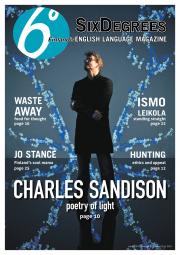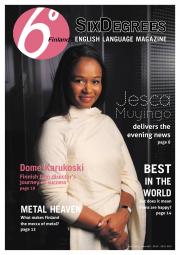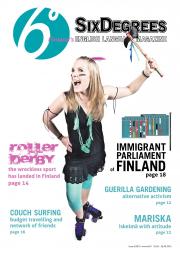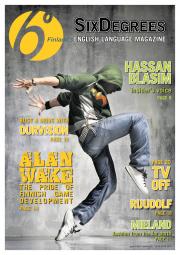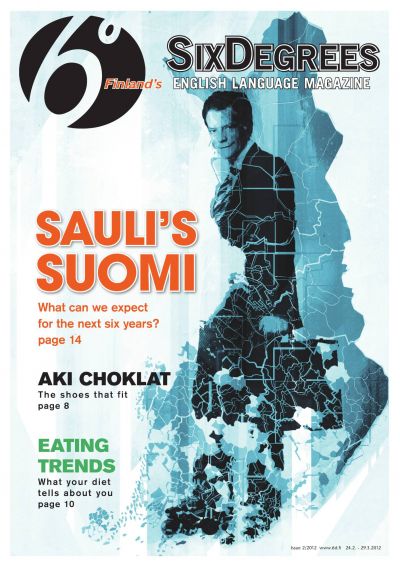


• Finland's ENGLISH LANGUAGE MAGAZINE SixDegreeS SAULI'S What can we expect for the next six years? page 14 SUOMI AKI CHOKLAT The sho e s t h at fit page 8 EATING TRENDS W hat your diet tells abou t you page 10 Issue 2/2012 www.6d.fi 24.2. - 29.3.2012
  • n fo a I irk V Virka InfoandInfopankkihaverecentlyjoinedforcesinorderto helpyou.Forsomeonewhoisplanning,orhasalreadymovedto HelsinkiandFinlanditcanbehardtofindtherightinformation aboutintegrationissues.Fortunatelyyoucangethelponlineno matterwhereyouare­alreadyinHelsinkiorstillplanningyour triphere. · Infopankki provides you with thorough information in 15 languagesonitswebsite,infopankki.fi. · These languages are Albanian, Arabic, Chinese, English, Estonian, Finnish, French, Kurdish, Persian, Russian, SerboCroatian,Spanish,Somali,SwedishandTurkish. · If you need personal assistance, then Virka Info is the place for you. You can organise a meeting with one of the Service Advisersservingyouin12languages.Youcanalsocalloremail VirkaInfoforguidanceandadvice. · Service is provided in Arabic, Berber, Bulgarian, Chinese, English,Finnish,French,Kurdish,Russian,Somali,Swedishand Turkish. · YouarewelcometovisitVirkaInfowithoutpriornotice,ormake anappointmentwithoneoftheServiceAdvisers. · Virka Info is open for all Helsinki dwellers regardless of origin and background and answers all types of questions related to Helsinki.Everyoneiswelcome! · Makethemostofyourvisit.WhenvisitingVirkaInfoyoucanalso enjoytheexhibitionsatVirkaGalleryfreeofcharge. Information about the Finnish society for immigrants i.f i ankk e I n f p m erg Phone (09)31011111 Mon-Fri9:00-15:00 Email virkainfo@hel.fi Helsinki 200 years celebrations Helsinki as a gateway to multiculturalism ­ the role of arts Free entrance Fri 24.2 at 6 pm Big Move-Theatre performance Free entrance Fri 30.3 at 7 pm Literature evening Literature and culture from Colombia. Guest speaker: Author Gustavo Consuegra. Sat 25.2. at 5 pm, free entrance Signuria mia Luca Cannavo sings Italian evergreens accompanied by Arto Huhtanen on the piano. Sat 25.2 at 7 pm, tickets 10 Women's International Living Room Indonesia meets Finland. Intercultural communications and Nusantara Association. Registrations to oge.eneh@hel.fi Mon 27.2 at 4 pm, free entrance Elisa A Musical about Love and Death. Fri 2.3, Sat 3.3, Fri 9.3, Sat 10.3, at 7 pm, tickets 15/12 International Women's Day Celebration Panel discussion about design. Delicacies and pampering to all women! Thur 8.3 at 1 to 9 pm infopankki.fi Information services in Helsinki for immigrants and people in Helsinki 14 E Film and debate on UN Anti-Racism Day. Wed 21.3 at 4 pm, free entrance Music Station Meissa Niang & The Djambaar feat. Badu Ndjai ­ Concert and Club. Sat 24.3 at 8, tickets 5 virka.fi Visit us at Helsinki City Hall Address:Sofiankatu1, Pohjoisesplanadi11-13 Mon-Fri9:00-19:00 Sat-Sun10:00-16:00 International Cultural Centre Mikonkatu 17 C, www.caisa.fi facebook.com/caisa.kulttuurikeskus
  • 16 23 ­ 29 FEBRUARY 2012 HELSINKI TIMES Bus traffic gets even more environmentally friendly The fast pace of technological development for passenger vehicles and new, cleaner types of fuel continue to lessen the environmental impact of bus transport. Helsinki Region Transport (HSL) gives priority to low-emissions vehicles in tendering bus services. The objective is a marked reduction in emissions levels, which is not possible without new technology, the best fuels, and more extensive use of electricity as a power source. buses to run solely on electricity will be tested later this year. In August HSL will add 52 lightweight buses to its fleet. The lighter weight of the vehicles brings significant cuts in fuel consumption, and consequently also in emissions. From next autumn on, around half of HSL bus traffic will operate with vehicles that meet the European Union's emissions standards for Enhanced Environmentally friendly Vehicles. Light buses use less The first two hybrid buses to be taken into use in the capital region will begin running early this year. They use thirty per cent less fuel than the traditional diesel buses, with a corresponding reduction in carbon dioxide (CO 2) emissions. Hybrid buses are powered by a diesel engine and an electric motor, with it being possible to use both simultaneously if necessary. The diesel engine is turned off at bus stops and at traffic lights, and the electric motor gets the bus moving again. This division of labour reduces both noise and CO2 levels. The batteries of the electric motor are charged when braking. Technology has developed greatly in recent years, and the first Biogas buses Later this year, gas made from biodegradable waste will be used in a number of buses operating in the Helsinki region . This latest innovation will replace the annual diesel consumption of almost fifty buses, meaning a CO 2 emissions reduction of many tonnes a year. The type of fuel used is the most decisive factor in cutting greenhouse gas emissions. In all, 1250 HSL buses operate in the Helsinki region every weekday, of which about a hundred run on natural gas. Improving public transport safety A new safety strategy has been created for HSL area public transport. The aim is to ensure the safety of both passengers and staff; everyone has the right to travel and work on public transport without fear of violence or harassment. Safety is promoted through a variety of preventive measures, such as increased training of drivers, ticket inspectors and conductors. HSL will draw up safety instructions for passengers. Guards will continue to be present at key terminals and stations especially on weekend nights, and onboard patrols will be increased. Onboard safety equipment will be increased. During this year, drivers will get alarm buttons. Emergency calls will be directed to a centrally managed control room. When tendering bus services, HSL requires that both old and new buses are equipped with a driver safety cabin. Also onboard camera surveillance will be increased. Siilitie metro station under renovation Extensive renovations on Siilitie metro station will begin from the start of March. The station will get a new and more spacious ticket hall and two new escalators. The lifts will also be replaced, as will the lighting furnishings and surfaces in the whole station. As part of the extensive renovations, the vicinity of the station will also be cleaned up and more parking spaces and bike spaces will be added. The station will remain in operation throughout the whole course of the operations, which are scheduled for completion in early 2013. Take a wintertime trip to the zoo The Winter Safari at Korkeasaari Zoo runs until 4 March. You can get there from the Central Railway Station square with bus number 11, which runs every half hour Monday-Sunday for the duration of the Winter Safari. The first bus leaves for Korkeasaari at 9.40, and the last bus back from the zoo to the City Centre leaves at 16.15. In addition to seeing the winter lives of the animals, you can also admire the carved ice sculptures of the Art Meets Ice competition. The restaurant at Korkeasaari serves lunch, but facilities are also available between 11.00 and 15.00 for heating your own food.
  • HELSINKI TIMES 24 ­ 30 NOVEMBER 2011 11 Start your weekend with news in English Why not add Helsinki Times to your morning coffee! Now you can read helsinki times on your ipad just as it was printed. Download the free app from the app store today. Stay informed about news and current affairs in Finland by subscribing to Helsinki Times. Contact us by email subscribe@helsinkitimes.fi or by phone 03 424 65340. Visit www.helsinkitimes.fi for a daily Finnish news update in English.
  • SContents ixDegrees 5 SixDegrees in this issue March 8 Aki Choklat BornintoaFinnish-Moroccan household, this native Jyväskylän's innovative shoe designs continue to spice up the footwear of the global population. 6 12 Starters The future in print With declining readership numbersandshrinkingrevenues, the future looks increasingly uncertainforprintedmedia. 17 Tastebuds WetryBrooklynCafé,discover what Finns are eating this monthandalsolearnwhereto find the best mughlai chicken tikkamasalainHelsinki. 18 Cultitude Q&A with Jean-Pierre Frigo, street buskers, Africa Umoja, Tampere Film Festival, Mark Lanegan and a guide to the Finland-Swedishliteraryscene. Also,what'sonatthecinema, and the latest CD, DVD and gamesreviewed. 22 Out & See Where to go and what to see in Helsinki, Tampere, Turku, JyväskyläandOulu. 26 Column ByJayDurston 10 Food for thought As the current pace of life sees fast food becoming an increasingly popular choice, how are we defined by our eatinghabits? 14 Sauli Niinistö Having convincingly won the second round of voting against Pekka Haavisto, just what lies ahead during his tenure as Finland'spresident? 21 Selja Sini Armed with her trademark ukulele, this rising star takes some time out of her busy schedule to have a chat with SixDegrees. The SixDegrees Team EditorAlexisKouros Managing EditorLauraSeppälä SubeditorJamesO'Sullivan Advertising & Marketing BobGraham,AimanKaddoura, WinstonRoberts +358968967422 Emailsintheform:firstname@6d.fi Out&SeeHelsinkiandcapitalarea outsee@6d.fi Out&SeeTampere outseetampere@6d.fi Out&SeeTurkuoutseeturku@6d.fi Out&SeeOuluoutseeoulu@6d.fi Out&SeeJyväskylä outseejkyla@6d.fi Layout & Graphic Design KirbyWilson MooseDesign&Photography Writers and contributors in this issue Allan Bain, Nick Barlow, David Brown, JayDurston,HansEiskonen,KaisaHerd, Marko Kainulainen, Anna-Maija Lappi, Marjo Matilainen, Beth Morton, James O'Sullivan, Mika Oksanen, Leonard Pearl, Nicklas Smith, Katy Suutari, Mimmu Takalo, Aleksi Teivainen, Jutta Vetter,TomasWhitehouse. Proofreading JamesO'Sullivan Print houseI-PrintSeinäjoki Circulation50,000pieces PublisherDreamCatcher Productionswww.dreamcatcher.fi 6°DreamCatcher Vilhonvuorenkatu11B 00500Helsinki tel.+358968967420 fax.+358968967421 info@6d.fiwww.6d.fi ISSN1459-5680 Allarticles,picturesandgraphics aresubjecttocopyright. Noreproductionorreprintingis allowedwithoutpermissionfrom DreamCatcherInc.©DreamCatcher Nextissueisouton 30March2012. SixDegreescanalsoberead atwww.lehtiluukku.fi Coverillustrationby HansEiskonen
  • 6 Issue 2 2012 Starters Top 5 things on our mind this month... Whitney Houston (1963-2012) "One of the greatest voices to ever grace the earth," according to Mariah Carey. If this is true, which is extremely doubtful if you think about it statistically and take into consideration musical genres other than merely pop, couldn't she have used this talent for something else than singing so many boring, instantly forgettable ballads? Inspired by the national epic Marjo Matilainen Ever wondered where your bank, insurance company, street name or even your local jewellery store have gotten their names from? COMPILED by Elias Lönnrot, the national epic of Finland, TheKaleva, is based on Finnish oral folklore and mythology. First published in 1835, a more extensive version appeared in 1849 and quickly became ensconced in the Finnish psyche. While The Kalevala has made an impact on Finnish literature and other art forms, its influence is also visible in everyday life. For example, many Finnish districts, streets and companies have taken their names from The Kalevala. Did you know that the insurance companies Ilmarinen, Pohjola and Tapiola are named after Lönnrot's characters? The reference to the national epic is apparently supposed to provide them with reliability in their customers' eyes, highlighting their traditional nature and Finnish roots. Furthermore, while Sampo is familiar to most of us as a bank, the name actually comes from the national epic. So too Lemminkäinen, Pellervo and, of course, Kalevala Jewelry. You might have seen these names as company logos, but just who are these figures in Lönnrot's work? Kalevala Day is celebrated on 28 February. Bloodshed in Syria The US and its allies put pressure on Bashar al-Assad to step down and Russia and China object. US Secretary of State Hillary Clinton said that 13 of 15 votes in the UN Security Council constituted "a unified international community." A misleading, technically sound definition ­ nothing less than we should expect from a Clinton. Outspoken Finnish banker opens his mouth yet again Among other things, Björn Wahlroos, chairman of Sampo Group's and Nordea's boards, decided to enlighten us about the flaws in Finland's social security system in a much-discussed interview. Next week, someone at the Social Insurance Institution of Finland (Kela) is asked for their thoughts on how to end the euro crisis. Speaking of which... Army cuts Ilmarinen Seppo Ilmarinen is a blacksmith, the eternal hammerer. Lemminkäinen One of the heroes of Kalevala who is described as a young and good-looking man. Pellervoinen Sampsa Pellervoinen is a mythological person or spirit who sows vegetation on earth, forests and also rocky lands. The crisis is back in the headlines! It's like saying hello to an old friend. Pohjola A location in Kalevala. The name is derived from word pohjoinen, which means north. Sampo A magical artefact constructed by Ilmarinen that is described as a mill that brings good fortune. It is stolen, then smashed and lost at sea. Tapio A forest spirit or a god, who is also called the king of the forest. There will be fewer employees and units in the future. An editor-in-chief of a regional newspaper is so disgusted with news that his local brigade will be abolished that he's returned the card you get upon completing your period of conscription to Minister of Defence Stefan Wallin. Good to see he's chosen such a worthy cause on which to take a stand. Compiled by Allan Bain. Correction: in last month's Top 5, it was stated that Pekka Haavisto would've become the world's first gay president if he'd been elected. Haavisto would've in fact become the world's first Green president. to... How best welcome the 6 years of President Niinistö? I would wish him to be truly faithful to the ideals of the `liberal right': make it possible for Finnish small enterprises to live, or survive, because it would give a lot more job opportunities. At the same time if he could try to put a stop to as many monopolies as possible. Especially to Alko, which is a disgrace in the `modern Europe' we are supposed to live in. Jen-Pierre Frigo, café owner and provocateur The best way to welcome Niinistö is having an open mind towards change and supporting his sense of direction for Finland. Anyone has a chance at success with positive thinkers backing them up. Silja Sini, singer-songwriter Life will continue as before. You may want to hear President Niinistö's insights on economy and finance. Mika Oksanen, journalist SO, just in case the winter wasn't dragging along slowly enough for you, keep in mind that this year is in fact a leap year. But why does this occur? Due to seasons and astrological events not occurring in a whole number of days each year, thus an extra day every four years is added to the Gregorian calendar in order to ensure that their timings do not drift. Then again, considering the effect of climate change in recent years, maybe no one would notice the difference if we forgot about this tradition. But, keep in mind, the most important aspect of adding an extra day to the Finnish calendar in 2012: we all have to wait just a little longer for vappu, and the sight of budding leaves on the trees once again! 29 February comes around only every four years, so make the most of it! Leaps and Bounds James O'Sullivan Can't argue with that The scientific link between racism and lack of intelligence. James O'Sullivan RECENT research has found a link between racist and prejudiced attitudes and the level of one's IQ. Yep, you read correctly: stupidity and racism have finally been scientifically linked! Conducted by a number of reseachers headed by psychologist Gordon Hodson at Brock University in Ontario, the study found that children with low intelligence are more likely to hold prejudiced attitudes as adults. The research concludes that adults of low intelligence tend to gravitate towards socially conservative ideologies that stress hierarchy and resistance to change ­ attitudes that can contribute to prejustice. By finding a link between intelligence, political ideology and racism, however, the findings no doubt will ruffle a few feathers. FINNISH AFTER DARK Learning the Finnish they don't teach in school David Brown and Mimmu Takalo Suomeksi: Sauma English equivalent: A seam, a joint (literal), no chance (figurative) Any dictionary will tell you that a sauma is a joint or seam, but in modern times it more often means having chance or possibility...or at least having no chance. As such, feel free to remind your friends that they have no sauma of getting a PhD, a decent job or even a date this weekend! · · · · Mäoonihanlovetsiiheneiliseenbaarimikkoon. Sori,muteisullataidaollasiihenmitäänsaumaa.Seonvarattu. I'msoinlovewiththatbarmanwesawlastnight. Sorry,butyouabsolutelyhavenochanceatall-heissotaken.
  • Starters Kaisa Herd 7 SixDegrees Writer Kaisa Herd and Lalli. Your best friend! A Owning a dog might just be the key to intiating social interaction. A WORD of warning: animals are not things. Do not ever consider getting a pet if you cannot provide it with love, care and a life-long commitment. Finns are not considered outgoing or chatty, but they have one weakness that melts their hearts and opens their souls: dogs. A fluffy puppy can be a key to integrate with your reserved, Nordic community. "I met a lot of people when I got Eddie; it was a good excuse to start talking to our neighbours," says Janica from Helsinki about her spaniel. "Now I can just approach a person with a dog, and they are happy to talk about their pets." Choose the breed carefully. You want a pooch that you can take care of and that will appeal to others. Little dogs are often fragile, while big ones can be seen as threatening. Your Doberman can be friendly and sweet, but it may scare off other dogs. Consider the name. You will know Pepsi, Lexus and Helmut, not their owners, and you will be referred to through your dog as well. If you decide to go for Urho or Rokka it will certainly earn you respect, as you show familiarity with Finnish culture. Even if you cannot manage more than a basic conversation in Finnish, it already shows that you make an effort. The dog owners will reward your attempts with greetings and polite inquiries into your puppy's life. Katri, owner of a Norfolk Terrier Lilli, says: "A dog doesn't necessarily help to get friends but gives you more acquaintances, because it makes you easier to approach. I talk with other dog owners pretty much every day. The conversation is mostly about dogs though." You'll start with short meetings on the street and then arrange playdates with other dogs in a park or joined walks. Slowly but surely you'll get to know most of your neighbours. Note: a sweet puppy can be a shortcut to a girl's heart. Tell me about your city... < vana! Ha Katy Suutari century marriage proposal Getting down on one knee is ancient history. Nick Barlow 21st 700 redlinx.com Mika Oksanen years of toy history "LISTEN, kids, when we were young we never had toys like that". Does this sound familiar? And is it really true? The exhibition Of Toys and Men now at the Helsinki Art Museum in the Tennis Palace could provide you with answers as well as an entertaining afternoon. There are hundreds of toys on display from a span of 700 years ­ that could even be before Barbie and Ken or He-Man and Skeletor! The exhibited toys are a source of fun as well as providing insights into what life was considered to be, and what experience and wisdom parents wanted to convey and express to their children. The accompanying photographs and art objects underline the importance of play in a child's life, and installations by Pierrick Sorin build on the message of the toys. The exhibition is a FrenchFinnish co-production, and runs until late May. Of Toys and Men Until 20 May Helsinki Art Museum, Tennis Palace Salomonkatu 15, Helsinki WILLING to hear about Cuba's capital city treasures, I interviewed Carlos Correa, dynamic teacher at Baila Baila dance school. His first words were: "It's a very safe city, specially for tourists," followed immediately by: "Of course, there, you have to go out dancing!" Casa de la Musica would be a place to see, however Carlos would encourage you to follow locals into the new favourite club, which changes constantly. Havana has its very own rhythm; music is played all over, night and day with beautiful insouciance. The same way you should get carried away by the beat on the dance floors, you shouldalso get lost in the vast and colourful old town. Another major scene of the city is Malecón, a broad esplanade and seawall that stretches along the coast of Havana, and the perfect place to catch a glimpse of the typical Cuban lifestyle. People might fish, swim, take a walk or simply be there until the evening comes, when music will make its entrance. There are also restaurants at Malecón, but Centro Habana, the Chinese neighbourhood, is where the tastiest food is to be found. The blend of culinary cultures illustrates well the Cuban state of mind: "let's mix traditions and see what happens!" ­ so everyone's welcome. If you're interested in getting closer to the reality of Cubans, finding a homestay is highly recommended. Spring, the beginning of summer and autumn are the best moments to travel to Havana for people used to the Finnish climate. HOW WELL DO YOU KNOW THE FINNISH SPRING? ASKING someone for their hand in marriage can be hard to do, and finding a unique and personal way to pop the big question even harder. You might imagine there aren't many truly unique ways to do it, but one mobile phone gamer, with the help of Finnish game developers RedLynx, managed to do just that. He proposed via the computer game he and his fiancé love playing, which is not only pretty cool, but also, I suppose, a perfect image of how modern technology can bring people together. The story: Peter met Ying in Thailand and realised that they had one, main thing in common ­ their love of computer games. The one game they're both mad keen on is called 1000 Heroz, an iPhone game produced by RedLynx whereby new levels are introduced every day. Peter having got in touch with the developers through a forum, it turns out that RedLynx, in an impressive display of customer service, agreed to insert a customised marriage proposal to Ying at the end of one day's upload within a week of the original request. "We were happy to accommodate Peter and Ying," said Joonas Tamminen, producer of 1000 Heroz. "When he told us how much both he and his girlfriend love the game, we just knew we had to include his proposal." So, it just goes to show that not only are some companies prepared to go the extra mile for their loyal customers, but love in the digital age isn't dead yet. Happily, Ying said yes. Book of the month James O'Sullivan OFFERING book lovers the opportunity to indulge in Englishlanguage conversation about the written word, Sello Library's monthly English Book Club continues in 2012. Having commenced in August last year, the programme includes a variety of modern titles, seeking to cover a broad range of issues and writing styles. "It's a lot of fun," states Päivi Gröndahl, one of the club's organisers. "Everybody's welcome. Even if you can't speak good English, you are welcome to join in. It's not necessary to talk at all, if you want to come and just listen." Offering tea and cookies to accompany the conversation, this year's programme continues with J. M. Coetzee's Disgrace on 21 March at 14:00. Subsequent months see Paul Auster's Sunset Park in April and the Book Club members choosing English Book Club the title in May. One Wednesday Books are available from Sello a month, free Library around one month before Sello Library each meeting, or from other libraries tel. 09 816 57603 in the Helsinki capital area. 1. Sun 2. Sprout 3. Light 4. Green 5. Bird Test your knowledge of Finnish vocabulary by using the local equivalent. Puzzle by Marjo Matilainen
  • 8 Issue 2 2012 We Met James Frid AKI CHOKLAT
  • We Met 9 SixDegrees I have been a visiting lecturer at HAMK Wetterhoff [the University of Applied Sciences in Häme, Central Finland], which is the only footwear school in Scandinavia and in the Baltic States, and some of the talent coming out of that school is simply amazing! Carina Chela S POTTING Aki Choklat in the street is not that difficult: look for his shoes. He will most probably be wearing the most eclectic or, at least, the spiciest shoes in that street. Choklat is without a doubt the most well-known Finnish of shoe designers. In his hometown in Jyväskylä, central Finland, he designed his first pair of shoes at the age of 12. This was a road that took him years later to London where, as a freelancer, he launched his first shoe collection Jubaki and studied at the London Royal College of Art. He was eventually hired as a designer for the Portuguese shoe factory Calafe, and later with his own AC collection ­ a high quality men's shoe focused line ­ has spellbound a set of international loyal Choklat devotees. Today Finnish-Moroccan cutting-edge shoe designer Choklat teaches at the prestigious Polimoda International Institute of Fashion Design in Florence. But Choklat's innovative style also attracted the attention of Finnish felt shoe company Lahtiset. In 2010 the company was awarded the Innofinland award for their collection "Aki Choklat for Lahtiset", one of the most sought-after of Lahtiset's collections. His book Footwear design (Portfolio Skills) is on shelves in March, a guide showing the key skills and tips behind the trade. SixDegrees had a chat with Choklat about his work, his inspiration, his family and a fascinating life spent in the countryside of Jyväskylä, in Morroco, New York, London and in Florence. What about your work for Lahtiset? I really like to work with those felt models because it is something that is traditionally Finnish. My own AC line has sold very limited numbers in Finland but the `Aki Choklat for Lahtiset' line has sold very well. I think the ACFL-002 is the best seller, a simple slipper with holes on top. And my work for in the Lahtiset factory gives me an excuse to visit Finland, not that I need one! You teach in one of the most prestigious design schools in Europe, the Polimoda School in Florence. What has this experience been like? I am a very down-to-earth person and teaching in any good school is as important as teaching in Polimoda. But of course I consider it an honour to be part of the Polimoda academic family, and working in a school whose president is Salvatore Ferragamo's son Ferruccio Ferragamo is obviously very special. It's rewarding and great to meet new talents. But yes, I must admit that is it also the most beautiful teaching environment in the world. And through work Florence has also become my hometown, so I feel very comfortable there. Are you a dreamer or a realist? I live a very simple, I guess realistic and non-fashion lifestyle. I cycle or walk everywhere. In Florence I live in a block of flats full of plus-70-year-olds. And in Italy a lot of my time involves quite elaborate eating. In London, quite a few pubs. I spend most of my days just working on things around the house, like gardening. But my work life is full of the other more superficial fashion stuff. So I really appreciate the so-called normal life. Hanging around with friends, reading. But a dreamer? Of course, also. I think a designer has to be a dreamer. Where is home? My home and office is in London but I'm in a lucky position to also have a flat in Florence. I also miss Finland constantly. I visit Finland often, because of my work, and my parents who live in Finland. In Finland I always go to the cottage, winter or summer. Always sauna! In summer I love rowing in the lake. I guess I can say I have several homes. What about the future? At present I am trying to focus on other work that does not involve factory production. I have done over 20 seasons with my label and I have felt that every season I had to design something just because of the fashion system. I will show my new creations when I have something to say. For now I am focusing on learning Italian and growing flowers in my terrace in Florence. I guess you get asked a lot if you like chocolate? Occasionally I am asked, but not too often. I do love chocolate, dark and bitter. I indulge myself from time to time! Sometimes at passport controls, when they notice my surname, I get the odd shriek of joy! Footwear design (Portfolio Skills) is being published in March. "I Lets start with the beginning. What inspired you as a child? My early memories of shoes relate to some of the typical Finnish children's footwear, such as Nokia rubber boots and felt boots. However, one of my fondest memories is of my great grandfather's grey Derbys in the storage room. Maybe they were from the `50s, but I remember them so well and I just loved them! Also already as a kid I had quite a different hobby: I was sketching shoes. But having a crazy family like mine also inspires creativity! Once we decided to paint all the rooms Barbie pink. My dad also made furniture from plywood that we painted electric blue, they looked great but they were not very comfortable! My Finnish grandmother was a seamstress so I also had these amazing suits to wear. I was different, and being different in Finland in the `60s, and especially in the countryside, was quite something. But coming from a bohemian multi-cultural family like mine has helped with life in general because you learn to look at things in a different way. although it has often been a struggle, I never regretted taking that road! How can you know if a new model of shoe will be a success, and where do you get your inspiration from? With designs you never really know. Many times the shoe that I didn't even want to show becomes the best seller. Like many designers my process of creating starts with inspiration. Everything ­ stories, life, relationships, exhibitions ­ inspires me, I sit down and design endlessly, no problem there. But it's difficult to predict what will be a success. My shoes have sold limited numbers in Finland but then they are sold more in other countries, like in the United Kingdom, Italy or Belgium. Is there a difference between designing for men and designing for women? Oh yes, there certainly is a difference between men's and women's footwear. Men's shoes are my world, for sure, but I still have to think about the women's world as well. Women's footwear is a totally different planet! To be honest I think that you are either one or the other, but as a designer its good sometimes to dive into both worlds. It's easy for me to design for men since I think of myself as the end user, but for some I used strong women as inspiration. You are also known for your love of handcraft and the artisan's work. What materials do you like to work with? Do you prefer handmade designs? I like to work above all with leather and some of my models are 100 per cent handmade, though the production models are factory made. Both productions are important. At the moment I am taking a break from factory production and I am working with Italian artisans to create something more personal. But I am interested in both traditional and innovative styles and also in combining them. Finland has not had particularly a footwear culture compared to countries such as Italy or Spain. What do you think of Finnish footwear? Finland still has some manufacturing. It might not have the same traditions as the other countries in, for example, Central Europe but we do have some special traditions that we excel in. The Finnish birch bark [tuohi virus] shoes are very unique to Finland, same as felt and even the combination of these two. I also think that Finnish foot wear design talent in the world is remarkable and world class. The innovations of Julia Lundsten's label Finsk, Minna Parikka's naughty but romantic collections, Janne Lax and his bespoke tradition meets sportswear and the legendary Pertti Palmroth that was selling globally decades ago. am interested in both traditional and innovative styles." Your first choice for a career was not in design, however, but you pursued a diplomatic career. Why was that? I wanted what most kids had: a normal life. I wanted a good job and money. So I moved to the United States to study at Utah University and after graduating I did a congressional internship at Capitol Hill. But I was profoundly unhappy. I later worked for many years for American Express. But I simply was not meant to sit in an office all day and wear a suit. Politics and office environments are not meant for me. When do you consider that your career as a shoe designer started? When I decided to join my sisters in New York. I continued there with my passion: selling and designing shoes in a market stand. We imported Moroccan clothes and accessories making alterations and updating them for street wear. I've always loved the Moroccan babouche slippers and, among other things, I redesigned them and they sold! The turning point in my career was in this market square in Soho. Someone bought one of my designs and when I realised how happy that person was, well, I never looked back again. That was around 1997 and, Shoe photos by James Frid and Teemu Töyrylä Aki Choklat Born: 17th of May 1963, Jyväskylä. When I was young I wanted to be... a painter. If I could use only one pair of shoes it would be... anything made of leather or felt ­ or both! Aki's stockists include Design Forum, Helsinki; Shu, Vienna; Harvey Nichols, London; and Apartment, Berlin. Christian Trippe
  • 10 Issue 2 2012 Lifestyle YOU EAT Text Nicklas Smith YOU ARE WHAT WE live in a world where everything is moving faster. This is a world where fast food has become one of society's focal points; a world where people guzzle sugary brown water and gorge on greasy, unnatural food in such quantities that the size XL has stretched to become XXXL and humanity has begun to physically mutate. All you need is to take a look around you to see programmes on television where people struggle with the obesity, addictions and diseases caused by the food culture of the modern age. There seems to be a gap between the mainstream and people with different values in life when it comes to their food habits. For example, if you're a Jew you live by Kashrut, a Jewish food law that forbids pork and allows you to eat meat from animals that have been killed in a timely fashion. And if you're a Muslim and live according to Halal, then you abstain from pork and alcohol. Similar to the Jews, the animals that Muslims consume must be killed in a special way. But what about other groups in society? How does a Mormon (a member of the Church of Jesus Christ of Latter-day Saints) eat? And what about people who are into anthroposophy? Do they just eat biodynamic food? How hard is it to live without meat in general? SixDegrees talked with some people about their food habits and how eating affects their lives. DIET TRENDS Gluten-free diet Do you want more energy and lose weight? Probably sounds appealing to people who want to look like a fitness god or goddess! Scientists say that a gluten-free diet can prevent autism, migraines and even schizophrenia. The gluten-free diet favours fruit and vegetables over grains. Dukan diet Similar to the Atkins diet with focus on the protein, this French trend has spread throughout the world. The first step contains non-fat, high protein foods with a lot of water. After the first tough days it's then permitted to enjoy some vegetables, fruit, wine and desserts, and finally whatever you want. A kind of Christmas for those who don't want to be strict with their food habits all the time... Dash diet Avoidance of red meat, sugar and processed food and eating a lot of vegetables, nuts, beans and whole grains, This diet will help you to prevent cancer, stroke and heart disease. Juice cleanse Do you want to purify your body and get rid of toxins? Cleanse your body for some days and be a part of a trend that has existed for at least twenty years and is still going strong. Paleo diet Here we talk history. Eat like your ancestors did thousands and thousands of years ago and forget grain products, excess sugar, vegetable oils and dairy products. Fish, roots, eggs and fruit and vegetables are the vital elements of this menu.
  • Lifestyle 11 SixDegrees Marina Reuter is an art therapist and works as a group leader for an anthroposophy course in Helsinki. She has been involved with anthroposophy for over forty years and was raised under the guidance of the philosophy by her mother, who has also been active in this lifestyle. Is it just a rumour or is it actually a fact that people who are involved in anthroposophy eat only biodynamic food? No, then we should starve to death. It's complicated to get all the kinds of food that are needed here in Finland. But of course it is the best food according to taste and nourishment. We have to be satisfied with what we get. So you don't have any strict rules within anthroposophy according to food and drinking habits? No, everything is very individualistic and it is a very free way of living. I drank a little alcohol earlier, but after I drank too much one time I decided to quit drinking. But as I said earlier, we have no rules and each of us can drink what she or he wants to. We have guidelines that people can follow, but no general applicable rules. But is it correct that meat is not on the top of the menu according to your lifestyle? No I don't eat meat, but there are those who do. I gave up fish a while ago, because it is not that healthy to quit eating habits too abruptly. And what about the question of potatoes being bad for you, according to the early teachings of your way of living? Well, I eat summer potatoes. So you skip the French fries then? Well, if I visit a restaurant I can eat them, but not at home. How big part of your identity is the food you eat? As an anthroposophist I don't make such big deal about what I'm eating. It's just an individual choice for me. Is there anything that you miss with your food habits? No, You can make really good vegetarian food with the right spices and a lot of imagination. For example, Mediterranean food with a lot of olive oil! What about the Mormons? What is their secret to long and healthy lives? Lasse Holopainen, a Bishop in the Church of Jesus Christ of Latter-day Saints answers some questions concerning their food habits. It has been featured in the media recently that Mormons generally live long lives, because of strict rules controlling what they eat and drink. So, what's the secret to living a long life, according to your faith, and what is not allowed if you are an active Mormon? An important tenant of our faith is a set of principles known as the Word of Wisdom. The Word of Wisdom is a law of health revealed by the Lord for the physical and spiritual benefit of His children. According to the Word of Wisdom, we should abstain from using alcohol, tobacco, tea, coffee and other harmful drugs. The Word of Wisdom is not only a restrictive guidance but also an exhortation to eat healthy food and to take care of our physical bodies. How has this living according to the Word of Wisdom affected your life? Well I believe I've evaded plenty of problems that either bad eating habits or stimulants such as alcohol or tobacco can cause. These include naturally issues related to physical health as well as social relationships. Additionally, abiding by these rules also has a purely spiritual element, which I feel has strengthened my character. How important are those rules for a member in the Mormon Church? I don't presume to speak in behalf of all the members in the church, but I would say that the Word of Wisdom is an important part of being a Latter-day Saint. It's a very visible element in our lives and something that sets us apart from other people who don't share our faith. As for the nature of the rules, they are considered a commandment from God, so theologically they can be considered important as well. Have you lived this way all your life according to the Word of Wisdom, nothing you miss? I certainly can't claim that I've always eaten healthily and, for example, always eaten meat sparingly [as stipulated in the Word of Wisdom]. But I can say that I've been able to meet the expectations of the Word of Wisdom pretty well. SixDegrees takes a closer look at veganism ­ a way of life that began in the 1940s and has grown considerably in popularity since then. Having been a vegan for around eleven years, journalist Allan Bain gives us some answers about this lifestyle. So, how did it all begin, why did you become a vegan? Oh, it was for animal rights reasons to begin with. I'm pretty left-wing and was interested in social justice and human rights, so the logical step was to start thinking about animals and how we treat them. There was this punk band called Propagandhi that influenced me a lot ­ they gave me the idea of going vegan as opposed to just vegetarian. How has being a vegan affected your life? Not very much. If I go to restaurants with my friends I don't really have to compromise and shops have a lot of vegan food. How does an ordinary menu look like for you, from breakfast to dinner? Breakfast: porridge with berries, soya yoghurt and powdered hemp protein. Maybe also a slice of rye bread with tahini and jam. Lunch/Evening meal: lots of vegetables in a sauce, for example, with kidney beans, chickpeas, soya, tofu or lentils for protein. Accompanied by non-egg pasta, potatoes, polenta, non-egg noodles etc. I also make a lot of soups with similar sorts of ingredients. Drinks: water, soya milk, soya milkshakes with banana or berries. How about drinking? Do vegans drink alcohol? I don't drink alcohol so I don't know so much about this. In some cases red wine and beer aren't vegan, but still, there's nothing stopping you from drinking alcohol and being a vegan at the same time. So you have not chosen this way of eating for your own benefit ­ rather as a political statement? For me it's all about animal rights and the effect of meat and dairy production on the environment. And finally ­ how are you feeling living this way? I feel fine, I'm in good condition!
  • 12 Issue 2 2012 Society Column David Brown is a language consultant and journalist, regularly covering stories in Africa, Asia & the Middle East. He has lived in Finland for 10 years. Real poverty David Brown I'VE been feeling a bit impoverished recently. Prices are edging up, and I've certainly noticed that costs of some basic products like meat and fish have risen significantly in the past couple of years. Likewise in business, prices are rising. The costs of accountancy, transport and even internet access all add up, and as soon as my workflow dips I find it difficult to cover my costs. THERE are clearly a lot of people in Finland doing a lot worse than I am. Massive redundancies at both Nokia and Nokia Siemens Networks mean a lot of people will struggle to make ends meet this year. POVERTY, I realise, is a very relative concept. I tend to avoid buying clothes or home furnishings at times like this, but on the other hand I will still travel this summer and can still pay my bills without a great deal of angst. But there are days when feeling that I can't afford to renew my gym membership this week genuinely frustrates me. "P overty is a very relative concept." AS a child my mother often reminded me about the starving children in Africa, particularly on days when I sniffed at the sight of having sausages and mashed potatoes for dinner. I never found these speeches terribly inspiring. Living in rural New Zealand, what did I care about Africa? But once or twice recently I have found myself thinking back to those speeches, and considering them from a more adult perspective. TAKE Nigeria, for example. The average income today is less than one third of what it was 1970. Half of the population live on 30 US cents per day; half have no access to fresh water. And this in a country that has earned 280 billion dollars in oil alone since independence. THE problem is not a shortage of money, but a shortage of conscience. Corruption destroys the fabric of society, reducing confidence in the electoral process, justice system, and the objectivity of the media. It encourages a dog-eat-dog mentality. FINLAND has one of the best records in the world of stamping out corruption, and this has been crucial in lifting Finland out of the serious poverty that existed here in both the 1950s and early 1990s. BUT when it comes to social conscience, I feel that Finnish companies need to guard against complacency. Laying off large numbers of workers in towns the size of Salo and even Turku also destroys the fabric of society, sapping confidence and increasing the prevalence of domestic violence, alcoholism and depression. The cost of mass unemployment is in no way localised. We all pay these costs. I HAVE no problem with lay-offs when companies are genuinely struggling, but too often companies tend not to reduce staff long before they reduce dividends or bonuses. In this, I think some Finnish companies could learn more from companies elsewhere, where loyalty is valued more highly than it is here. WHILE Finland need never fear the kind of poverty that haunts Nigeria, within our own context, it can still be disturbingly real. Friend or foe? A look at the awkward relationship and interaction between traditional print media and the internet. Aleksi Teivainen THESE are times of distress for traditional print media. Circulation has declined throughout the internet-age ­ gradually for some publications, dramatically for others, and the list of casualties is ever growing. Meanwhile, modern readers competently skim through multiple online news-sites in a matter of minutes, liking and sharing, but not necessarily caring and understanding, as they go. The newspaper, helpless against the topicality and urgency of the internet, inevitably seems an antiquated medium. Yet, therein lies its strength: routine and tradition. People around the world cannot stomach their breakfast without skimming through the daily. Others cannot digest their lunch without a peek at the hottest celebrity gossip, others without absorbing analyses of recent developments in world economy. Moreover, as a reaction to the overwhelming abundance and variety of online content, the traditional ideals of newspapers ­ objectivity and accountability ­ are highlighted, and valued in the minds of many a reader.
  • SixDegrees 1991. A notable decrease was also recorded for 15-24 yearold Finns, from roughly 90 per cent in 1991 to 70 per cent in 2009. Meanwhile, over 80 per cent of 15-24 year-old Finns have embraced online news sources indicating their comfort with these various services on offer. Reading newspapers is associated with the Finnish character, Statistics Finland pronounces. The newspaper is a common media that promotes democracy and freedom of speech. Are these online developments then threatening the very essence of Finnish society? "Finns are still avid readers", assures Puro. "I doubt that the willingness to follow current societal discussion and the desire to comprehend societal phenomena is altogether disappearing, although undulations do occur. However, the question remains: What is the fate of the prints?" moderators to approachable peers capable of the occasional typo. Especially the mass media was long criticised for failing to genuinely adapt to and appreciate the blog as a unique, interactive environment. Toward the end of 1990s, the idea of an online newspaper was a facsimile. "With facsimiles, however, newspapers shot themselves in the foot," Puro notes. "The number of subscribers immediately decreased, and the media lost touch with them, especially the young." Helsingin Sanomat abandoned the facsimile and established a separate online editorial, Puro continues. "Investments were made, and at one point, the online editorial was bigger than the news room proper ­ amazing from today's perspective. Also the online content, in the early 2000s, was extremely diverse." However, online advertising loyalty, have not gone unnoticed, and contemporary media, similarly, encourage readers to participate. For example, the Finnish women's magazine Olivia recently published an edition, the content of which was designed by the readers. "The media want to present themselves as open via social media. News tips, for example, have increased enormously, social media being the channel through which gossip and news travels," Puro observes. However, despite the influence of social media in the dissemination of news, certain areas remain immutable. "The journalists of the major Finnish media, namely YLE and Helsingin Sanomat, remain as gatekeepers and still wield the same power they did a century ago." Then there is crowdsourcing. Commonly utilised in special circumstances only, apparent as the occasional reader-contributed photo from an accident site, some publications have embraced crowdsourcing as the primary method of creating content ­ not least due to its affordability. In addition to photography, readers may contribute reports and articles. "The role of crowdsourcing in the media of tomorrow is difficult to predict. Us researchers will speculate whatever happens in hindsight." Recycled news Meanwhile, the large media groups strive to offer their readers, listeners and viewers a more comprehensive media experience. "The logic here is simple: synergy allows the recycling of content within a large group", begins Puro. "It is a global phenomenon." "Recruiting apt professionals and the journalistic process are ample costs, but such level of professionalism is not necessarily needed elsewhere in the media group. For radio, for example, journalists who can articulate the journalistic material produced elsewhere in the group will get the job done," Puro explains. For print media, still faltering in the face of the internet, reduction of costs is paramount. The extreme manner in which commercialisation is rejected in online environments, however, calls for truly innovative sources of income in future. 13 SixDegrees I N T E G R AT I O N Are you lost in the Finnish bureaucracy? Do you need help in finding a job, a place to study or a language course? We offer assistance and advice! Welcome to visit our service point on Mondays and Wednesdays 11-16 or call or send us an e-mail with questions concerning integration. Seminars 6 March 15-17 Writing a CV for a job in Finland Is your CV up to date? During the lecture you will get tips on how to write a CV for the Finnish job market. Lecturer: Tony Eichholz. Register to bridge@luckan.fi by 2 March. "F or print media, still faltering in the face of the internet, reduction of costs is paramount." had not evolved beyond banners and pop-up ads and readers remained unenthusiastic about paying for online content. Thus, generating income proved difficult. "Eventually, the decision was made to run down the online editorial. If we look back to the state of germination, it is evident that goals have been re-assessed." However, within media groups, a distribution of work has been established: around-the-clock reporting has been left to the tabloids, while Helsingin Sanomat, for example, strives to be a platform for more analytical and comprehensive reporting. "A truly novel segmentation of the market," Puro enthuses. Engaging readers The blog as an online environment allows a more immediate interaction between the author and readers. The participatory nature and its benefits, expressly the enhanced reader 24 March 10-16 Hygiene training and proficiency examination (30 ) The training course covers all subject areas of the test. The course is followed by the hygiene proficiency test. Venue: Arbis, the Swedish Adult Education Centre in Helsinki, room 33, Dagmarinkatu 3. Lecturer: Marja Laukkanen. Language of instruction: English. Register to bridge@luckan.fi by 15 March. More information: www.luckan.fi/bridge -> Events Similarly, routines and associations help preserve the circulation of magazines, proposes Jukka-Pekka Puro, a docent of Media Studies at the University of Turku. "Women's magazines, for example, allow readers to look at other people's homes and décor. Reading is relaxation, a form of escapism." Routines can, however, be broken, he warns. Rather than technological advances, the unpredictable social interest seems to determine the future. Print in statistics Traditionally, Finns are eager readers of printed media. Statistics Finland indicates that in 2009 over 80 percent of Finns read newspapers regularly. However, statistics also reveal a significant decrease in the reading habits of young Finns: roughly 30 per cent of 10-14 year-old Finns read newspapers regularly, compared to over 60 per cent in Endangered "In essence, the industry is currently struggling with two problems: the decline in circulation and subscribers, on one hand, and the hike of the price of paper, on the other", Puro states. "The internet, especially, and its utilisation has puzzled the print media. I believe the major domestic newspapers will retain their position. But, if we look at the smaller provincial and regional newspapers, circulation is bound to decline further. In the long run, unfortunately, they are doomed." Statistically, the future for magazines seems similarly bleak. Statistics Finland data shows that pensioners are the only age group that has maintained their interest in print magazines, a fact attributable to staunch technological resistance. "But, certain magazines, chiefly the ones focusing on human interest or targeting a specific audience, seem to cope. It is astonishing, really, how Aku Ankka [Donald Duck, published weekly], for instance, manages to stand its ground. Changing face Blogs have intruded the domain traditionally ruled by magazines. "The popularity of fashion and décor blogs, in particular, has boomed over the past decade. They do not, however, directly compete with magazines but provide supplementary content instead", indicates Puro. "Blogalisation" has consequently shaped the online presence of magazines and newspapers alike, from distant 26 March 15-17 Preparing for a job interview What should you think about when preparing for a job interview? During the lecture we will discuss how to prepare for and what typically happens during a job interview in Finland. Lecturer: Tony Eichholz. Register to bridge@luckan.fi by 23 March. 27 March 10-16 CV Clinic Do you need tips on how to write a successful CV? Bring your CV (in Finnish, Swedish och English) to our CV Clinic and let us help you to improve it! Venue: Counselling Centre Ne-Rå, Kolmas linja 12. Drop in! Organised by Ne-Rå and Bridge. More information www.ne-ra.fi or www.luckan.fi/bridge. Activities for women 5 March at 15-17 Monday with Martha Join us for a visit to the Office of the Ombudsman for Minorities. The Ombudsman aims to prevent ethnic discrimination and promote equality in many different ways. Presentation by Planning Officer Maria Swanljung, working together with Ombudsman Eva Biaudet. Venue: Office of the Ombudsman for Minorities, Mikonkatu 25, Helsinki. Register to kansliet@helsingforsmartha.fi by 2 March. Print media in numbers · · Over 80% of Finns read newspapers regularly. Roughly 30% of 10-14 year-old Finns read newspapers regularly, compared to over60%in1991. Anotabledecreasewasalsorecordedfor 15-24year-oldFinns,fromroughly90% in1991to70%in2009. Over80%of15-24year-oldFinnsutilise onlinenewssources. · · LUCKAN Simonkatu 8, 00100 Helsinki Contact: bridge@luckan.fi / 040 485 9636 / www.luckan.fi/bridge

  • 14 Issue 2 2012 Feature Sauli's Suomi NIINISTÖ IN BRIEF · 64-year-old Niinistö is married to the head of communications of the National Coalition Party (NCP), Jenni Haukio, 34. · He has a Bachelor's degree in law, and before becoming a Member of Parliament in 1987 he held various positions, including as rural police chief in his native Salo and as a court jurist. · He became a National Coalition MP in 1987. · He was Minister for Justice from 1995-1996, and Minister for Finance from 1996-2003, after which he took up the post of vice director of the European Investment Bank. · He returned as an MP following the 2007 general election, but instead of again becoming a minister as widely anticipated he became Speaker of the House. · This was Niinistö's second bid for the presidency, having also been the NCP candidate in 2006, losing to Tarja Halonen in the second round. · He's known for his support for Finnish entry into the North Atlantic Treaty Organization (NATO), and for his self-described "stubborn" tendency towards deviating from the NCP party line on a range of issues over the years. Finland's incoming president won't enjoy a number of the powers his predecessors were granted, but that doesn't necessarily mean the status quo will remain unchallenged.
  • SixDegrees Text Allan Bain, Illustration Hans Eiskonen 15 SixDegrees O N 5 February, Finland elected its twelfth president. His name is Sauli Niinistö. He'll be taking office on 1 March and his tenure will last six years, which could be extended by another six if he decides to run again after his first term is up. In contrast to a state such as Germany, where presidents are little more than relatively anonymous ceremonial heads of state (until they're accused of corruption and forced to resign, that is), in Finland the presidency is a very respected institution and the president is one of the most visible politicians in the country. At the same time, things have changed dramatically over the last 30 years, and the presidency is no longer invested with the powers it once held. Furthermore, with legal amendments to the remit of the president coming into force upon Niinistö entering office, it's been claimed that he'll be the weakest president ever in the history of the republic. With that in mind, what, if anything, can we expect to change with Niinistö at the country's helm? How will he put his economic expertise to use as president? Under Niinistö, will Finland finally join the North Atlantic Treaty Organization (NATO) and will its foreign policy move in a different direction? What does the man stand for and what values shall he be promoting? SixDegrees set out to find the answers to these questions. Comparing Niinistö and Halonen The election of Niinistö, a politician from the conservative National Coalition Party (NCP) who, as has become the presidential tradition, has now given up his party membership card, marks the end of a 30-year Social Democratic dominance of the presidency. Niinistö is also the first president in 50 years to emanate from the NCP. As such, this month's election can definitely be considered historic and maybe even symbolic. But will Niinistö's Finland be much different from President Tarja Halonen's? "I don't believe any drastic change will happen. The elections of Mauno Koivisto, Martti Ahtisaari and Tarja Halonen were based on their representing not just Social Democracy but also something else," says Professor Pauli Kettunen of the Department of Science Social History at the University of Helsinki. "Halonen was able to complete her Social Democratic identity with wider shared objectives such as gender equality and cultural tolerance [while] one may expect that the messages Niinistö will send as `value leader' ­ a very problematic idea that has become popular in public debates ­ will differ from those we've received from Halonen," he adds. Kettunen points out that Halonen's emphasis on the importance of Finland helping forge global solutions to global structural problems contrasts sharply with Niinistö's keener interest in nurturing a healthy economy and raising issues of individual morality when discussing social problems. "The background of Niinistö as Finland's finance minister and vice-president of the European Investment Bank obviously supports the role of economic arguments in his message, especially in the context of the current euro crisis. The idea of external economic necessities that can only be met with introducing tough national policies has a long history in Finland, and Niinistö seems to be a clear-cut representative of this mode of thought." Outi Kuittinen, a researcher at Demos Helsinki, a think tank that prepared and wrote 2010's Country Brand Report at the initiative of then-foreign minister Alexander Stubb, brings up similar themes as Kettunen. "President Halonen has been very active in global issues, especially at the UN. This hasn't been the profile of Sauli Niinistö. However, he seems to believe that everyone can act in important issues. In his campaign he highlighted `Finnish acts': joint ventures Finns have made and solutions they've developed to tackle different issues," explains Kuittinen. "So, what Niinistö could bring to Finland's image is action by the people," she continues. "In this election people showed a lot of interest in taking part, acting themselves for their preferred candidate and the values they presented, and both candidates mobilised this well. We think this momentum shouldn't be wasted but rather should be taken into use permanently. This would also be in the spirit of the Country Brand." Background Niinistö, a lawyer by trade, became an MP in 1987 and was made leader of the NCP in 1994, a position he held until 2001. After the 1995 parliamentary elections, the NCP remained in government and Niinistö was initially appointed justice minister before taking charge at the Ministry of Finance. Niinistö stood down from the chairmanship of the NCP in 2001 and chose not to run in the 2003 parliamentary elections. Instead, he went to Luxembourg for four years before returning to Finnish politics after the 2007 parliamentary elections, in which he secured the biggest-ever vote haul by a single candidate in Finnish history. Although he was tipped to become Finland's foreign minister in the post-election government, he was ultimately made Speaker of the Parliament. He chose not to run for re-election to the Parliament last year at least partly because, one would imagine, he was already being described as odds-on favourite to become the country's next president. This was the second time Niinistö set his sights on the presidency, having also ran for president in 2006, when he narrowly lost out to Halonen in the second round of voting. Thus, he's pulled "W hat Niinistö could bring to Finland's image is action by the people." SixDegrees asks Jennifer Ramirez is a student from Columbia. Would you have voted for Sauli Niinistö (either in the first or second round) if you'd had the right to vote? No, not at all. Who do you think will be the better president, Tarja Halonen or Sauli Niinistö? And why? Halonen. I think she has a more humanistic approach to politics due to her work in NGOs. For some reason, even if you are not a Finnish citizen, you felt that as president she was closer to the people - you could relate to her as a human being. What issues would you like to see Niinistö focus on during his term in office? I think the bureaucracy and the immigration policies in Finland are somehow absurd. I could never imagine that a country like Finland has a system that reminds me of Russia or even my own country Colombia. How can it be possible that many people need to take a course called `ABC of Finnish bureaucracy' to understand how to make being here less complicated than it already is? off the challenging trick of losing once but maintaining enough popularity and momentum to triumph second time round. Other notable "loser-winner" presidents have been Richard Nixon, who lost to John F. Kennedy in 1960 but returned to win in 1968, and France's François Mitterrand, who only succeeded at the third time of asking. The death of Niinistö's first wife, who was killed in a car accident in 1995, and the media's coverage of this tragic event raised his profile among the Finnish public. His dating former Miss Finland and ex-MP Tanja Karpela was also poured over in the press, as was his marriage in 2009 to Jenni Haukio due to the age difference Niinistö and Haukio share and the hush-hush nature of their relationship up until that point. On top of his political career and love life, Niinistö is also known for his hobby of rollerskating as well as for surviving, together with one of his two adult sons, the tsunami caused by the 2004 Indian Ocean earthquake. Foreign affairs The Finnish presidency differs substantially from presidencies in states like the US, Russia and France. There was a time when Finland can be described as having had an authoritarian presidency, which then became something more akin to a semipresidential system where power was shared by the president and the government. However, in today's Finland the president clearly plays second fiddle to the government. For instance, Finnish presidents were previously deeply involved in domestic politics, such as government formation, but nowadays it's only really foreign policy where he or she holds actual power. Most of Niinistö's international experience comes from the EU, where, according to the Constitution, it's the government and not the president that takes the lead, but this doesn't mean he'll be out of his depth. "I've the feeling he's very well connected and respected," says International Relations professor Hiski Haukkala from the University of Tampere. "He has contacts with important figures in the Russian elite, though not with Vladimir Putin. If there are gaps in his network, the presidency will afford him the chance to rectify the situation," he continues. Haukkala also mentions Niinistö's meeting with Vice President of the United States Joe Biden last year during the latter's visit to Finland. Many expect Finland's relations with the US to improve with Niinistö as president, reversing the slight estrangement that's taken place during Halonen's term in office. As for Russia, Niinistö has said that he sees steps on the road to greater democracy having been taken there. Commentators have also suggested that under Niinistö prospects of good relations with Finland's eastern neighbour are favourable. With this in mind, however, Niinistö is on the record as having said that he would bring up the topic of human rights when meeting with Russia's leaders. He's also said that he'd do the same with China's leadership, although meeting with the Dalai Lama, if the Tibetan dignitary were to visit Finland again, would be one step too far in Niinistö opinion. Whenever the topic of Finnish foreign policy is raised, the question of whether Finland should join NATO looms large and can cause bitter debate between the "yes" and "no" camps. Niinistö is undoubtedly pro-NATO but stated in the run-up to the election that he wouldn't be pushing for membership for Finland in the next six years. Whether he'll try to subtly promote membership or simply ignore the subject cannot be known for sure, but Haukkala thinks the latter scenario is more likely. "My feeling is that `the NATO question' has lost most of its relevance. The level of crisis management cooperation Finland shares with NATO is already good and Article 5 [of the North Atlantic Treaty which states that an attack on one party to the treaty will be considered an attack on all parties] is of no great relevance in the current situation," he argues. Rather, it's another international organisation, the EU, that will consume the Finnish government's as well as its incoming president's attention for the foreseeable future. While Niinistö won't, as a rule, be taking part in EU summits and the like, Haukkala believes that the former finance minister will be indispensible to the government. "He's a person who knows financial and economic matters, especially in the EU, through and through," says the University of Tampere professor. "If Greece goes bankrupt and ultimately leaves the euro, for example, Niinistö could prove invaluable, as the government will need to analyse the situation and Niinistö could act as an interlocutor in such discussions." Haukkala also notes that an NCP-led government like we have at present would be especially eager to hear Niinistö's thoughts on topics pertaining to the euro's future. At the same time, the Yuri Kuratov from Russia works in robotics. Would you have voted for Sauli Niinistö (either in the first or second round) if you'd had the right to vote? Definitely not. I would have voted for Pekka Haavisto is both rounds. Not so much because he was the Green candidate, but because seems more affable and friendly. Who do you think will be the better president, Tarja Halonen or Sauli Niinistö? And why? I think Tarja Halonen has been one of the best leaders of an EU country in the past decade. Niinistö might be great for the economic advancement of Finland, but Halonen always looked like she actually cared about the people she met. What issues would you like to see Niinistö focus on during his term in office? In this current economic climate, the promotion of trade and industry with other countries should be his primary concern. In saying that I don't think the issues of civil rights in the countries he visits should be forgotten. To be liked by the Finnish public, Niinistö needs to be a little more Haavisto - if that makes sense. Mirko Lukic is a graphic designer from Serbia. Would you have voted for Sauli Niinistö (either in the first or second round) if you'd had the right to vote? No. I wouldn't have voted for either second-round candidate in the first round, but would have gone with Haavisto in the run-off against Niinistö. Who do you think will be the better president, Tarja Halonen or Sauli Niinistö? And why? It is impossible to say really. They are very different people, at least in the public's eyes, so they have their own personality traits. Niinistö isn't even in the job yet ­ let's give him a chance. What issues would you like to see Niinistö focus on during his term in office? I think to keep on building the good relations with Russia is very important. As part of that I think NATO membership would be a negative thing ­ at least regarding trade with our biggest neighbour. I think for Russia, Niinistö is an unknown quantity and he needs to allay those fears. NCP is currently one of six parties of government, and some members of the cabinet may not welcome Niinistö getting too involved in government decision-making. Also, if Niinistö starts to make public statements or take up positions in meetings that contradict the government's line, this could irk certain ministers. For example, Minister for Foreign Affairs Erkki Tuomioja "isn't afraid to speak his mind," as Haukkala puts it. However, Haukkala points out that, perhaps as a result of Finland's size, all key players in Finnish politics know one another, so no serious surprises are generally thrown up and disagreements are uncommon. Moreover, there aren't any particularly contentious issues that Niinistö and individual cabinet ministers are likely to clash over. On the home front During election campaigning, Niinistö and his oppo-

  • 16 Issue 2 2012 SixDegrees nents were grilled on their positions concerning with the facts and try to influence others by way everything from taxation and abortion to the of setting them a positive example. marginalisation of young people and animal The closely related subject of racism is also rights. Unfortunately for those Finns who based an area where Niinistö chooses to emphasise their decision on whom to vote for on these pri- everyday experiences of Finns. For instance, marily domestic matters, Niinistö won't be able when asked by SixDegrees's sister publication to do very much to affect these issues, at least Helsinki Times to rate how racist a country directly. As Haukkala suggests, "The weakened Finland is on a scale of 0 to 10, with 0 being not nature of the presidency hasn't entered the psy- racist at all and 10 extremely racist, Niinistö had che of the Finnish public," many of whom still this to say: associate the presidency with Urho Kekkonen. "I haven't met one person in Finland who's What Niinistö will be able to do is to try to said to me that they've had bad experiences of steer public debate. Yet Haukkala thinks there immigrants. At the same time, we read a lot may be even more scope for action in domestic in the media about racist sentiment in Finnish affairs given a specific set of circumstances. He society. Therefore, I'd say somewhere between says that if Finland were faced with a prolonged 4 and 6 based on the content of this ongoing political crisis or extraordinary situation, the debate." president may be called upon to act. "This Sauli Niinistö may be less interested in wouldn't be an impossible development," he attempting to help end the plight of the world's says, giving as an example the difficulty Prime poor than Tarja Halonen, and lack the common Minister Jyrki Katainen had when forming a touch that boosted her popularity and which new government last summer. has become a hallmark of her presidency, but As for Niinistö's take on multiculturalism and for someone with his juridical and financial racism in Finland, issues that obviously touch the background he's surprisingly capable of speaklives of foreigners living here, the president-elect's ing to Finns at their level, and this could be of views are relatively liberal albeit not radical. great significance in helping him maintain his "The general impression I get based on a own level of popularity. What will he achieve in few texts, TV interviews and discussions is the next six or twelve years and what legacy will that Niinistö is aware of the problems con- he leave? These are impossible to foresee and nected to multiculturalism," says Lecturer in matters over which he may have little control, Sociology at the University of Eastern Finland as so much is determined by circumstance. Yet Vesa Puuronen. it's unlikely that Niinistö will just sit back and "Especially, he's stressed human rights as a let events take their course. basic starting point of both political decision-making and the everyday interaction of people," Puuronen Issues Niinistö will likely Issues President Halonen emphasise as president has emphasised during continues. her time in office Certainly when Niinistö has been asked for his · EUandeurozonestability thoughts on hate speech, · Theeconomyingeneral · Humanrights a topic that became a hot · Defencecooperation · Globalstructuralinequity talking point last year, he's · Good relations with the US · Genderequality andRussia stated that we can't force· Sustainabledevelopment fully change attitudes but, · Individualendeavours · GoodrelationswithRussia rather, can provide people Koulutuksia maahanmuuttajille. Kotitalousopetus, talouskoulu · suomen kielen opiskelua · kodinhoitoa · arkielämän taitoja · kesto viisi kuukautta Valmistava koulutus, MAVA · suomen kielen opiskelua · tietoa erilaisista ammateista ja koulutuksista · tutustut suomalaiseen työelämään · kesto yksi vuosi TUEX · suomen kielen opiskelua · tukea opiskeluun, jatko-opintojen suunnitteluun tai työelämään siirtymiseen AURA · pääpaino luku- ja kirjoitustaidon oppimisessa Koulutukset alkavat elokuussa 2012. Opetuskieli on suomi. Täytä sähköinen hakulomake www.hdo.fi > Hakijalle. www.hdo.fi
  • Tastebuds 17 SixDegrees Bagels, Brownies & Brooklyn Punavuori gets a taste of the Williamsburg scene. mends Recom Restaurant SAMRAT Beth Morton eader R Photos Tomas Whitehouse Expatriate Alex Southern boasts about the best mughlai chicken tikka masala in Helsinki. "I love curry and struggled to find a decent one in Helsinki but now I've not just found the best I've ever tasted, but it's at an affordable price. The grand décor and plush surroundings also set it apart as something special." Samrat Pohjoisesplanadi 22 Helsinki In this new series, 6D readers tell about their local favourite place to grab a coffee, sip on a beer or enjoy a bite to eat. Send a brief email to james@6d.fi, and let us know what you recommend! offense), so it's not at all bad. Food-wise they do bagels ­ a novelty in Finland ­ made to their own recipe. Again, the sisters say these aren't the same as those from their homeland, this time due to the local water, but are nonetheless tasty enough. The choice, as I intimated earlier, isn't vast. Along with the options of turkey or prosciutto for 5 euros each, the cinnamon and raisin, onion and plain bagels can be toasted and served with cream cheese, butter and/or jam. But the owners are building their own kitchen and planning some menu expansion, which is a good thing. No sweet `til Brookyln For those with a sweet tooth, however, be prepared to be satisfied. The house speciality is the Brownie á la Mode, a massive slab of chocolate brownie topped with vanilla ice-cream and warm chocolate sauce. In my experience the sugar rush lasts about two hours, followed by a general feeling of wellbeing and the desire for a long nap. Nom nom. Muffins are also on offer. Never having been to the borough, I can't say for sure whether or not there's a real Brooklyn vibe about the café, but it's amiable and cosy and an excellent way to spend some time reading the paper or chatting with your friends. If you're lucky enough to get a seat. What Finns a re ea t ing THIS MONTH Salmon Soup (lohikeitto) Just in case you thought that Finns can't get enough fish in their diet, rest assured that homes around the country this time of year are consuming salmon soup in copious quantities. Finnished with a sprinkling of dill on top, this creamy comfort food helps make the chilly winter days that little bit more enjoyable. All available space is utilised at Brooklyn Café, including the window sill. Nick Barlow NESTLED in a small location at the far end of Fredrikinkatu lies Brooklyn Café: a little slice of NYC in the centre of Helsinki. So, at least, believe the owners Sharron Todd and her sister Brenda. Sharron and Brenda started the café a mere couple of months ago, but in that short time it has already established itself as one of the favourite hang-outs and coffee joints for the young and fashionable Punavuori crowd. Hailing, as you might expect, from the USA, Sharron and Brenda had few ties to Finland until Sharron met and fell in love with a Finnish man. Opening a café in Europe was something the sisters had both dreamed of since childhood. After contemplating the idea of realising their dream in Rome, where they had also spent a considerable amount of time, the girls decided to go out on a limb and move to, er, sunny Helsinki. "The cold doesn't bother me that much," Sharron laughed when I met her in the café a few weeks ago, "It gets cold in Brooklyn too." Cosy vibe Brooklyn Café is small, with seats for only 14 people laid out, although Sharron reckons twenty could fit in at a push. "We've become quite popular already," she says, "and would love to have more space. But it's risky to expand too early." Although the cafés diminutive size might make it a matter of pot luck whether you'll get a seat or not, it does make for a most cosy atmosphere. Photos of the sister's family and friends from around the world adorn the walls, and the pair is so friendly that it's almost like going to your mate's house for a cup of coffee ­ except you have to pay, obviously. The menu itself isn't very extensive, although bizarrely there have apparently been comments from customers that there's too much choice. Personally, I disagree. Most of the menu is taken up by the coffee and drinks options. It has to be said that the coffee is very good, being brought in from an independent roaster. "It's good coffee, but it's not like we have in America," Sharron smiles. On the other hand, American coffee seems to be liked much more by those from the USA or Canada than from other countries (no Brooklyn Café Mon-Fri 6:30-20:00 Sat 9:00-21:00 tel. 046 632 1087 Fredrikinkatu 19, Helsinki
  • 18 Issue 2 2012 Cultitude possible to quit TV. I also have a lot of conversations about cooking and eating good food. I suggest to try and match food and wines, and that way avoiding only drinking. But we also exchange other views about, for example, the wonderful Finnish culture. What does a Frenchman know about Finnish culture? Oh a lot! Sometimes even more than Finns themselves. I grew up with Sibelius music in my childhood and somehow Finland has always been present in my life. I first started coming here in the early 1970s and I moved here in 1975. I have lived in Turku and Helsinki since ­ except for the 14 years I lived and worked in Paris, my hometown, between 1988 and 2002. Finland fits me very well ­ the beautiful landscapes in the Saaristo [The Turku Archipelago], Lapland and Eastern Finland's lakes and forests. It almost makes me cry. And the culture is so rich. Most Finns think culture is just for the elite, but here are wonderful writers, musicians and playwrights and I love the food and the history. Finns have so much to be proud of and I have spent many years exploring it, as a journalist and as a curious citizen. Okay, so I don't approve of the schooling system here, the hard drinking and the way a lot of people slide into depression. But I hope I can bring new ideas ­ and all things French for that matter ­ and I have the feeling I bring something to the table. What does the future hold for you? Right now I'm happy running the café. The talk and discussions are like fresh air to me. I need it. But I want to do more cooking. We serve coffees, croissants, cakes, baguettes, quiches, soup and crepes, but maybe we can have more warm lunches because I also love cooking ­ it's just another way of sharing, you know. In the longer run, I think my wife and I will move to France and open a Finnish café there, maybe name it Café Waltari or Paasilinna, my favourite Finnish writers. We would serve Finnish food like wild game, mushrooms, fish and berries. And talk about Finland and Finnish culture. I think the French people are waiting for it. www.voltaire.fi Teija Sandholm Name: Jean-Pierre Frigo Born: 1951, Paris, France Profession: A journalist since 1988. Occupation: Owns and runs the French Café Voltaire in Turku, since 2010, with his Finnish wife, Teija. Came to Finland for the first time: 1971 Finnish citizen since: 1985 Home: Turku ­ at the moment Future plans: Opening a Finnish café in the French province. Eats for breakfast: Ruisleipä, and once in a long while ­ a croissant. French, because I'm French, and I love the French culture, of course: the writers, the thinkers, the musicians, the food, the coffee ­ and especially the many discussions. That is what I'm trying to do here, create an `open window' for ideas and views. The kind of café I would like to go to myself. How do you create this environment? I have brought part of my own library here and guests are most welcome to read or borrow the books. Also I have table service: I don't believe in the Finnish self service and leaving people alone. I wait on the tables and I ask questions because I'm happy to talk and because I want to share my views. I'm glad to hear what the customers are thinking and feeling. Every Thursday we have an open night. I tried with political debates in the beginning but no one said much, so now it's all kinds of different performances: book or poetry readings, music playing or whatever the customers want. Yesterday this little place was fully packed and the noise in here was wonderful. Almost like a café in France. What kinds of customers come here? Not huge crowds but enough. Friends of France, fans of gastronomy and culture and maybe people who are not 100 per cent satisfied with Finnish society ­ and who like to talk. Surprisingly many want to talk. Maybe this place and I bring them the energy and the courage to be themselves ­ and that gets the talking going. But I don't just want to talk about the usual Finnish things like work and TV. What do you talk about then? Sometimes I provoke a little. Not too much to scare the customers off, but just by saying that it's more important and actually saner to read books than newspapers. And that it's A cultured VIEW Karen Witt Olsen Seeking an environment to read, provoke and discuss? A Frenchman living in Turku might have a word or two to say about that. AT CAFÉ Voltaire in Turku customers are greeted by a talkative, inquisitive and slightly provocative café owner. His name is Jean-Pierre Frigo. He bakes wonderful croissants and baguettes. He loves literature and many ­ but definitely not all ­ things French and Finnish, and he happily shares his views with the customers ­ right then and there, or at the many special performances that are held at the café. SixDegrees sat down with Frigo to learn just why his career as a journalist has lead him to create this lively establishment, hear his views on Finnish culture and contemplate why one should favour reading books instead of newspapers. What makes a Frenchman who has worked as a journalist for 20 years open a café in Turku? Two years ago I just had enough "F inns have so much to be proud of and I have spent many years exploring it." my knowledge and exchange views with other people. Why? I like to think of this café as a cultural-sharing and a communicating café. But it is very of journalism. Working as a freelance correspondent for French and Finnish magazines and TV-stations for 20 years ­ plus writing two books ­ was a lonely job. I'm a very social animal and I wanted to share Taking it to the street Who are the buskers on our streets and what kind of music do they perform? Nicklas Smith KICKING off this new series is 39-year old Fedor Grigorev from St Petersburg, who travels every weekend to Helsinki to perform classical tunes on his marimba (an instrument that consists of a set of wooden bars with resonators). "Finnish people are very generous, especially in the summer," says a frozen Fedor, while taking a break after performing tunes of Mozart and Chopin on his exotic instrument. Fedor tells me that he has played his marimba for around three years and before that he performed classical music on a xylophone that he had made himself. But after hard work and having saved some money, Fedor was able to buy his own marimba ­ his one possession that travels with him wherever he goes. This excellent performer is working as a street musician full-time and you can see him on weekends at either Aleksanterinkatu or at Esplanadi Park. If you're into classical music and can't afford to a ticket to a classic concert ­ I assure you this is worthy of your attention.
  • Cultitude Tampere Film Festival 19 SixDegrees Restoring faith in the art of cinema Mika Oksanen WERE you already planning to give up going to the movies altogether after another two hours of pure plastic, bent acrimoniously into one-liners, breasts or explosives? Then the Tampere Film Festival may be your bright buoy amidst a cesspool of tedious film truisms. The basic idea of the festival is to screen a lot of short films from around the globe within just a few days. While short films may today be scarce to come across elsewhere, Tampere makes up for the deficit, and "short" may really mean "brief": this year the shortest film is over in 2 minutes, and only some of the documentaries last more than 30 minutes. Were you tempted to think on the lines of, "yeah, any Live Nation fool can get a screening for their film there"? If so, we're tempted to think your name is not Roger Ebert ­ take a look at this year's international competition: 65 films were selected to partake out of the whopping total of 4,400 offered. With any tighter sift, you might as well have cancelled the festival altogether! This year's festival starts on Wednesday 7 March and ends on Sunday 11 March. The venues are located within a comfortable distance from each other in downtown Tampere, the main one being Plevna. The main programme consists of the international and national competitions, each with 11 screenings of multiple films, and a variety of special programmes. The films in the international competition come from 41 countries and are all contemporary, made in 2010­2011. This year's special programmes celebrate the centennial Estonian cinema and Nepalese films, among other themes. Animation always has a special role at Tampere. This year the festival offers works of the Hungarian Ferenc Cakó, The Anit Prop programme of German animated films and Animoi! by AV-arkki, the Distribution Centre for Finnish Media Art. Tickets are already available, so don't waste time. To appreciate the festival programme in full and in detail, check the website. Tampere Film Festival 7-11 March www.tamperefilmfestival.fi Through the pages A closer look at Finland-Swedish literature. Nicklas Smith Dance Africa! James O'Sullivan Blues Circus James O'Sullivan CONTINUING his prolific output of influential music, Mark Lanegan hits the stage at The Circus on Sunday 26 February in support of his latest solo release, Blues Funeral. First becoming known as frontman of grunge-era outfit The Screaming Trees, Lanegan quickly transcended the confines of the genre with a number of solo releases that showcased his more sensitive musings. Subsequent battles with substance abuse ensured his material contained darker edges, as Lanegan proceeded to hook up with Queens of the Stone Age, co-writing their monster hit "No One Knows" along the way. 2004's brilliant solo release Bubblegum saw his trademark gravelly vocals and dark reflection harmonizing into something majestic, with guests such as PJ Harvey, QOTSA's Josh Homme and former Guns N' Roses members Duff McKagen and Izzy Stradlin offering their sizable talents during its recording process. An unexpected pairing up with Isobel Campbell saw the unlikely duo release three well-received albums, before Lanegan's short attention span saw him focussing on the project that also brought him to the Finnish stage, The Gutter Twins. Promising haunting perspectives blended with sparse landscapes, intertwined with longing and lust, Sunday night at The Circus promises to be something quite extraordinary. Mark Lanegan 26 February, 21:00 Tickets 32/35 The Circus Salomonkatu 1-3, Helsinki BRINGING their breathtaking show all the way from Johannesburg, Africa Umoja promises an evening filled with vibrant colour and energy when they take to the stage at Savoy Theatre on Monday 5 March. Established in Soweto, South Africa in the 1950s, the troupe takes their name from the Zulu word for "togetherness", performing powerful aural and visual interpretations of historical events that have occurred in the territories of South Africa. With up to 35 performers onstage at any particular time, togetherness is certainly personified as each performance draws on a winning concoction of f lavours that includes jazz, reggae, soul, indigenous dance and gospel pieces. A mainstay on the international touring circuit, Africa Umoja has accumulated a number of awards during its existence, including the 2005 Planet Africa award in Canada in the Traditional Performance category. So, be sure to have your dancing shoes on hand when they arrive to Helsinki for the first time, on a night guaranteed to make that winter chill a distant memory. Africa Umoja 5 March, 19:00 Tickets 34/36 Savoy Theatre Kasarmikatu 46-48, Helsinki MOST people in Finland have heard of Moomintroll and his exciting friends, but probably not everyone knows that this story was in fact created by a Finland-Swede author. And although this group of people has been reduced from around 10 percent of the population to some 5 per cent during the last century, the Finland-Swedish community continues to enjoy a rich culture and literature of its own. A considerable amount of money continues to be put into projects such as tours for authors and translation seminars. For example, in recent years the Swedish culture fund in Finland gave away almost 300,000 euros for a project called Finland-Swedish literature for an International Audience. So let us go through some of the authors who stand in the shadow of Tove Jansson's worldwide success with The Moomins. Bo Carpelan, who passed away recently, was one of the most renowned Finland-Swedish poets and novelists between 1946 and 2010 (a posthumous novel was published in 2011). Winner of the Finlandia Prize twice, Carpelan was always in the spotlight and was loved by both readers and critics. Kjell Westö is another popular author, who wrote the novel Där vi en gång gått ("Where We Once Walked"), the film adaptation of which was released towards the end of last year. The impressive list goes on with famous authors like Zacharias, Topelius, Märta Tikkanen, Edith Södergran and Gunnar Björling. SixDegrees had a chat with Pia Forssell from The Society of Swedish Literature in Finland to gain more insight into the subject. How does modern Finland-Swedish literature looks like, compared with that of a century ago? A lot of the Finland-Swedish literature looks about the same today as a hundred years ago. Then and now it's about young men getting into trouble. Runar Schildt is the biggest name of the early 20th century. Milieus of Helsinki were frequently introduced in short stories of that time. And fifty years back there was more political involvement. Christer Kihlman and Henrik Tikkanen are among the more remarkable authors from that era. One difference between Finland-Swedish and Finnish literature is that Finland-Swedish literature has a longer tradition than that of the Finnish, and international influences were reflected earlier in Swedish-Finnish literature, but Finnish literature has now caught up with FinlandSwedish literature. Which genre of Finland-Swedish literature is the most popular at the moment? Thrillers, anthologies on the most varying themes, memoirs and autofiction. What do you think about the future of the FinnishSwedish literature? Topelius predicted 130 years ago that Finland-Swedish literature would fade away completely, which did not happen. I'm afraid that Finland-Swedes in general do not speak Swedish well, which does not promise a good future. But I hope that I'm just as wrong as Topelius was. Savoy Theatre
  • T, AS RF OU RY T TE NU I 0M E 1 IC RV SE * ONEY SEND M R ONLY ME FO HO ** Y TO: MONE SEND 8 ORLDW CES W ER PLA Y OTH AN AND M SH GLADE BAN ON MERO CA A GHAN KENYA IA NIGER TAN PAKIS ES ILIPPIN PH RUSSIA A GAND U NE UKRAI IDE DS UR HAN N YO ICE IS I CHO www.moneygram.com Mubaarak Shop 9B 25 Kastelholmantie Helsinki, 00900 G Money Transfer 12 Hameentie Helsinki, 00530 Samsons African & Oriental Food Groc 3 Ali 1 Haapaniemenkatu Helsinki, 00530 Donia Halal 6 Meri-rastilan Tie Helsinki, 00980 Food & Jones Helsingin Rautatieasema Helsinki, 00100 Mama Afrika 7 B 69 Hameentie Helsinki, 00530 CS4741 *Subject to agent hours of operation and local regulations.**Transfer rates shown are applicable for transactions from Finland only. In addition to the transfer fees applicable to a transaction, a currency exchange rate set by MoneyGram or its agent will be applied. MoneyGram International Limited is an authorised payment institution regulated in the United Kingdom by the Financial Services Authority. ©2012 MoneyGram. All rights reserved.